

In the West, we’re now several generations into a food system that has suffered no major famine. Nobody in the middle class alive in the West today (outside of WWII in Europe), remembers food insecurity. For all intents and purposes – famine in the West, and most of the rest of the world, has been eradicated.
In the past century, it’s almost entirely due to government action (war, genocide, communism) that people have starved in industrialized nations.
And the sad thing is - the vast majority of people today take it for granted. Most people’s hands have never tilled the soil or planted crops. Most people are so entirely separated from their food production that they’re not even grateful for this state of massive plenty.
Read social media and you’ll find endless people complaining about the quality of food. “It’s poison!” they shout. “Burgers are too expensive!’ they lament. “Monsanto is evil!”
Yes, all of this is true to some extent.
But I bet most of them haven’t gone hungry a single day of their lives – or if they have, it was due to personal financial hardship and not regional famine. And I bet they don’t really understand what’s involved in growing their own food.
Plenty – but at what cost?
Well, our food quality has gone down in many ways, sure.
There’s junk food galore, mystery ingredients abound, obesity is on the rise. This is all true - but remember that this is all almost entirely by choice. You don’t have to eat those donuts. You choose to. Nobody is forcing you to buy the cheaper non-organic food or eat from Taco Bell. You choose to.
It’s convenient. It’s cheap. It’s plentiful. By historical standards, even with the recent bout of inflation, people today spend far less of their share of income on food than they have in the past.
A subsistence farmer in the 14th century would have woken up before dawn to work the fields, and gotten home in the dark. And some would have still starved.
Throughout most of human history, famine was a serious problem. A drought, a failed harvest, pests, mice getting into your food store - these would decimate entire towns. Millions have died a slow and painful death because the basic need of food production has been fundamentally uncertain for most of human history.
So when I read the endless stream of health bloggers and homesteaders complain about the current state of the food system, I can’t help but wonder where their sense of perspective went.
As much as our current food system is flawed – it’s at least given us food security. Something no peasant has had in millennia.
My Food Production Journey
This year is the first year I’ve tried to seriously produce my own food. We’ve planted the occasional small garden in the past, but always at a very small scale, and not taken it very seriously. This year is the first year I’m actually trying. It’s the first year I can try, really.
This is the first property we own. We had been moving around rental apartments and houses every year for the past decade - and improving the soil in a rental you’ll only stay in for a year just feels like a futile waste of time.
We started our homestead journey on our property a few years ago. First we had to clear enough of the forest to build our house, then we built an off-grid home, then we moved in and spent the next year fixing issues with it, big and small – upgrading our solar system, fixing our rainwater catchment system.
Now we’re fully off-grid. 100% of our energy comes from the sun. We even have a Polaris EV we charge from our solar panels that I use for chores around the homestead. 100% of our drinking, cooking, cleaning, etc. water comes from the rain (and the drought has made us have to ration more than we’d like!). We have three ways to heat our home in the winter, including with firewood I can cut down myself.
But food? We’re completely dependent on someone else to produce our food. Sure – we can stock up on food, but that doesn’t make us independent. It just means we can weather supply chain disruptions better. But if supply chains stopped, we’d still starve.
Chickens
So this spring, when enough of our other needs were taken care of, I decided it was time to focus on food production. We already had chickens, though getting them to lay in a consistent spot has been hard. I built them some wonderful nesting boxes that they completely ignore. Instead they’ve decided to lay in the cat house, our Polaris Ranger, behind the rainwater tanks, under the wood chipper. Pretty much anywhere except where we wanted.
We free range them. Truly free range, we have no fence at all. We feed them a relatively small amount of grain in the morning – the rest of their calories come from bugs and plants they find throughout the day. But I have no idea where they’re laying their eggs the past two weeks. Maybe somewhere in the forest?
Sure – I could confine them so they lay in a consistent spot. But then I’d have to buy more grain from the store, making me more dependent. And then we’d lose the benefit of them eating bugs all around our house.
Getting chickens and then being completely dependent on store-bought feed doesn’t solve the problem of getting your own eggs, it just changes your dependency from one input to another.
The Garden
This spring I also built a large fence around our new garden. It was expensive - it had to be over 6’ tall because we have tremendous deer pressure here. And it had to be rabbit-proof, and hog-proof.
I put down black silage tarps to kill the weeds (adopting the no-till method) and spent weeks producing and spreading around wood chips. I was late to the season because in April when everyone else was planting, I was still building infrastructure. I had to setup my indoor seed starting system with grow lights, too. One day I’ll build a greenhouse. One day…
A fungus almost killed all my tomato plants before I even transplanted them. I had to baby them back to health, meticulously trimming back any sick leaves so it would stop spreading and separate the healthy ones from the sick ones.
I initially planted the wrong cucumbers and had to rush-order the right pickling variety in the mail. The broccoli was too late. The list goes on and on.
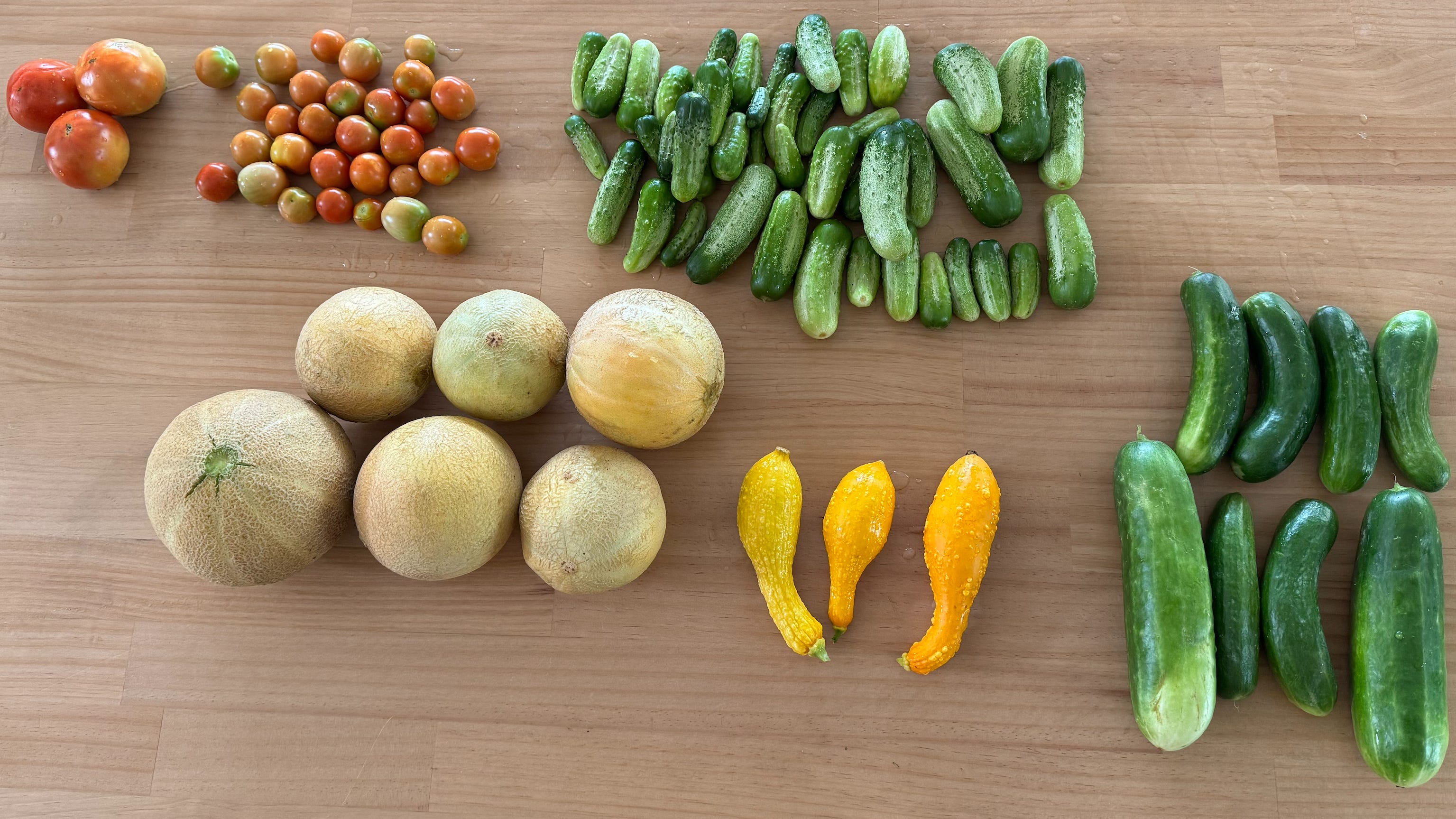
In the end I was still able to get a lot of food to grow. Our melons have been fantastic. We pick more cucumbers every day than our family can eat. It’s become my primary snack. Our tomatoes are delicious. My wife made a squash soup that even the kids will eat.
But we’ve had as many failures as successes.
Fermenting
I’ve been trying to pickle cucumbers and tomatoes, and it is hard. I’ve had to throw away so many after they’d start to mold. There’s quite a big learning curve with fermentation. And if you can’t figure out how to ferment and pickle your vegetables, what are you going to eat in the winter?
People today take for granted year-round vegetables, but these are a historical anomaly. In the 18th century if you wanted to eat tomatoes in the winter you had to pickle them. You can’t just walk into a store and buy tomatoes grown 3,000 miles away.
Our supply chains are so long and our dependence on store-bought produce so great that almost all of us have lost the skills required to preserve our own food. I know my parents never taught me. I’m having to learn from scratch, and YouTube makes it seem way easier than it is.
Yes - those store-bought tomatoes only have an eighth of the nutritional value home-grown tomatoes have, but at least they’re consistently there.
Growing your own cucumbers is great – but if they don’t get enough water they turn sour with Cucurbitacins that can make you actually sick. I had no idea I’d have to baby them so much through this drought. “Just water them” – right, but we’re off-grid, remember? We don’t have an endless supply of cheap fluoridated city water. If I want to water my cucumbers I have to haul water from the pond.
Trying to grow my own food has made me far more grateful for the grocery store, as imperfect as it is, than I’ve ever been.
I know the first year is more about learning than volume, but still, the lessons are pretty hard. It sucks having to throw away half a dozen jars of fermenting cucumbers because they went moldy.
I hope over the years I can produce more and more of our food until eventually we’re self-sufficient here, too - but this is definitely a difficult problem to solve. It requires a lot of manual labor, knowledge, and skill.
If you want to have food independence in 5 years, you really need to start growing now.
Want to support my work? Becoming a supporter unlocks more features on Lookout Map. Use the Lookout Map to relocate and find your ideal off-grid homestead, model nuclear fallout in your state, route around Flock cameras, and more.
Hard work for sure, but definitely worth it when successful. And now is the time for people to learn, while there still is food 'on the shelves' in case of an unsuccessful learning period. Just got a bunch of seeds (40 varieties) to start my own journey next planting season. Unfortunately, don't really have the necessary room for chickens (at least not with two dogs in the house), but me and my roommate are considering a move to a more rural area in the near future to make that more possible, and hopefully some goats as well.
How much do you guys forage?
Have you looked into food forest design ?
There are likely nut producing trees in your region that can provide you with a lot of high nutrition food, the key is, the best time to plant them was ten years ago, so you know, next best time is now.
Have you ever tried growing this?
https://gavinmounsey.substack.com/p/amazing-amaranth
How about sweet potatoes?
Both of those produce a lot of food with a little space and effort.