

1. The Government’s Warrantless Wiretap Law Expires in Two Months. Congress Is Scrambling.
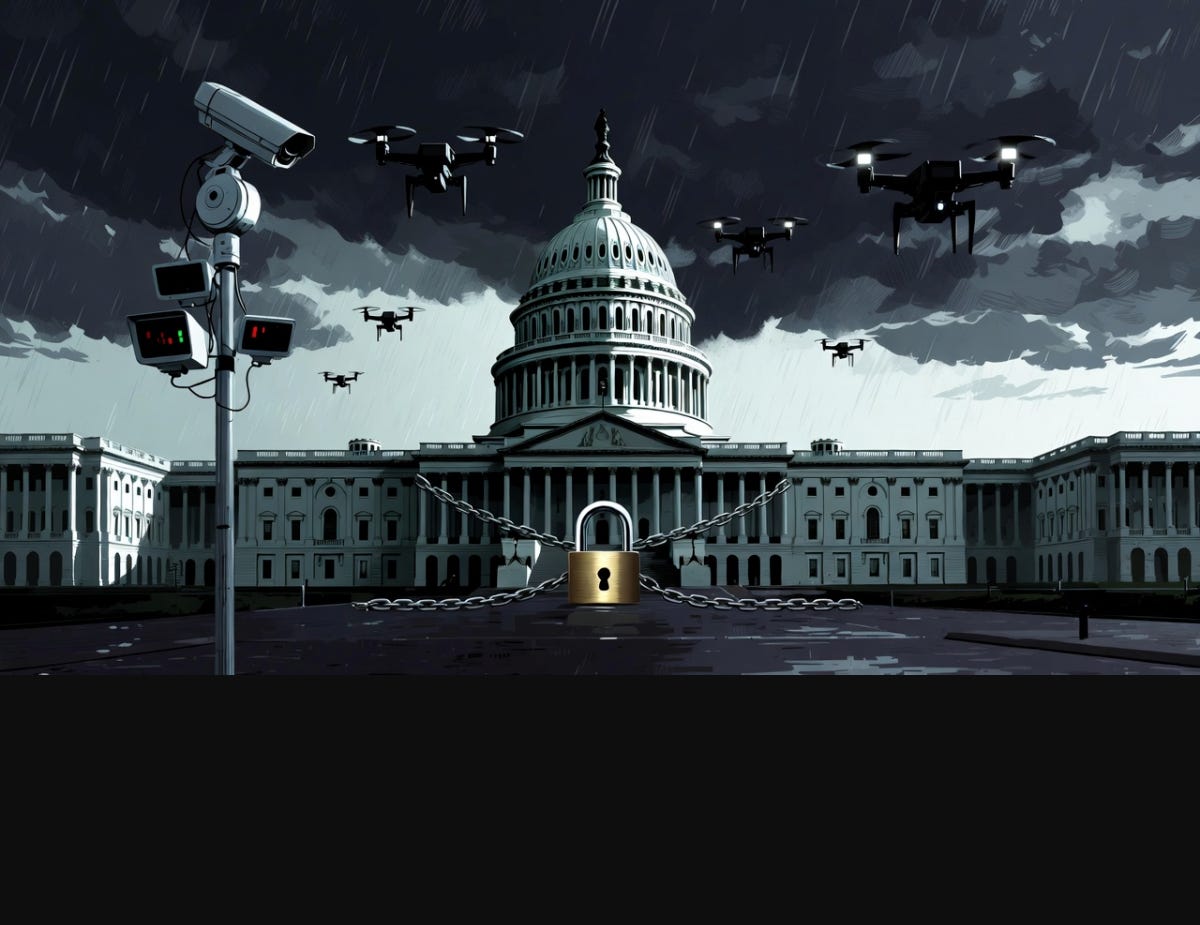
Section 702 of the Foreign Intelligence Surveillance Act expires April 20, and a bipartisan pair of senators just reintroduced legislation to reform it before renewal. The SAFE Act, from Sens. Dick Durbin (D-IL) and Mike Lee (R-Utah), would require the government to get a warrant before searching Americans’ communications swept up in foreign surveillance dragnets.
Here’s the problem Section 702 was designed to solve: spy agencies can target the communications of foreigners abroad without a warrant. But the process routinely sweeps up texts, emails, and phone calls of Americans talking to those targets. Government oversight bodies have extensively documented unauthorized searches of this data by the FBI and other agencies. The Privacy and Civil Liberties Oversight Board found systematic abuses going back years.
The SAFE Act would also revisit a 2024 provision that critics say dramatically widened the government’s surveillance reach by expanding the definition of communications service providers required to comply. A classified hearing last week reportedly erupted in frustration when intelligence officials refused to say whether the White House even wants to renew the law. The White House is holding a separate meeting with GOP lawmakers to discuss a path forward.
Section 702 expires April 20. The SAFE Act would add basic warrant protections that should have been there from the start. If Congress can't manage that, letting the law lapse entirely is better than rubber-stamping warrantless surveillance for another few years.
Sources: Nextgov/FCW, Brookings, The Record, CNN
2. A Major Public Hospital Just Hired ICE's Favorite Contractor
New York City’s public hospital system is paying Palantir $4 million to optimize billing and scan patient records, according to documents obtained by The Intercept. The same company that built ICE’s deportation-tracking software and provides battlefield analytics to the Pentagon now has access to health data for over 1 million New Yorkers who use the city’s 70+ public clinics and hospitals.
The contract allows Palantir to work with protected health information and “de-identify” patient data for uses beyond research. Privacy researchers have repeatedly shown that de-identified medical data can often be re-identified using publicly available information, linking names, addresses, and immigration status back to medical records.
NYC Health and Hospitals says the software will “increase charges captured from missed opportunities” by automatically scanning doctors’ notes to find billable procedures. Translation: an AI reads your medical records to squeeze more money out of Medicaid.
This matters beyond New York. Palantir holds similar contracts with the UK’s National Health Service and is expanding its healthcare business while simultaneously running the digital backbone of ICE’s mass deportation operations. Activists and nurses’ unions are calling for the city to cut ties immediately. The question they’re asking: will immigrant patients stop seeking care if they know a government contractor is analyzing their data?
Sources: The Intercept, Crain’s New York Business
3. A Man Faces 20 Years in Federal Prison for Moving a Box of Zines
Daniel “Des” Sanchez Estrada goes on trial tomorrow in Texas on federal charges of concealing documents and conspiracy to conceal documents. His alleged crime: moving a box of anarchist zines from his parents’ house to another residence in Dallas. He faces up to 20 years in prison.
The charges stem from a July 4, 2025 anti-ICE protest outside the Prairieland detention center in Alvarado, Texas, where an officer was shot. Prosecutors do not allege Sanchez Estrada or his wife were involved in the shooting. The homemade zines contain no violent plans. Under normal circumstances, possessing political pamphlets is clearly protected speech under the First Amendment. But the government’s concealment theory only works if merely having the literature is treated as criminal.
The prosecution came on the heels of Trump’s executive order classifying “Antifa” as a domestic terrorist organization and National Security Presidential Memorandum 7 (NSPM-7) on Countering Domestic Terrorism. Last week, AG Pam Bondi acknowledged for the first time that the DOJ maintains a secret list of domestic terrorist organizations under NSPM-7, refusing to say who’s on it. Last month, activist Lucy Fowlkes became the 19th person indicted in connection with the same protest. Her alleged crime: using Signal to tell people to delete messages and removing people from group chats, which prosecutors call “hindering prosecution of terrorism.”
The founders placed enormous value on the right to possess and read anything, even material that challenged the government. What’s happening in Texas is the opposite: prison-style censorship exported to the general population, where possessing political literature becomes evidence of criminality. If that precedent holds, it won’t stop with anarchist zines.
Sources: The Intercept, The Intercept (Bondi/NSPM-7), Protect the Protest, KERA News
4. Elon and Bezos Race to Beat China to the Moon (You’re Funding Both Sides)
SpaceX and Blue Origin are in a heated race to land astronauts on the moon before China’s planned 2030 mission, and NASA is writing checks to both billionaires to make it happen.
Elon Musk announced plans this week for “Moonbase Alpha,” a permanent lunar facility that would support up to one million satellites for AI computing in orbit. SpaceX absorbed his xAI company in January and is prepping for a $1 trillion IPO later this year. Jeff Bezos isn’t sitting still. Blue Origin shut down its space tourism business to focus all resources on its Blue Moon lander, which shipped to NASA last week for testing.
Both companies are building their lunar landers with billions in NASA contracts under the Artemis program. NASA Administrator Jared Isaacman, who took the job after paying SpaceX millions for private spaceflights, is pushing both companies to accelerate. This is taxpayer money funding a private race between two of the richest men alive. The geopolitical framing is that America “must” beat China, but that assumes China’s lunar plans are a threat rather than just their space program.
SpaceX’s Starship has launched 11 times since 2023 but has yet to deploy anything into orbit or demonstrate the in-orbit refueling critical for a moon landing. The 2028 timeline for a crewed mission is, by industry consensus, wildly optimistic.
Sources: Reuters, Epoch Times
5. FCC Investigates a Talk Show, Warns “Fake News Will Be Punished”
The Federal Communications Commission opened an investigation into whether ABC’s “The View” violated equal-time rules by interviewing a Democratic Senate candidate without offering equivalent airtime to opponents. The probe comes amid what the agency frames as a broader crackdown on broadcasters.
The equal-time rule dates to 1934 and requires broadcast stations to offer equivalent opportunities to all candidates if one gets airtime. Exceptions exist for bona fide news programs, interviews, and documentaries, and the FCC has historically applied them broadly. But in a January 21 notice, the FCC’s Media Bureau warned that current talk shows “may not qualify” for the news exemption and that stations could lose their broadcast licenses for violations. Telecom attorney Harold Feld notes the notice ignores decades of precedent and appears designed to intimidate.
An FCC source told Fox News that “fake news will be punished.” Commissioner Anna Gomez later downplayed the probe, but the damage is done. Networks are now on notice that booking political candidates could trigger federal scrutiny. That’s a chilling effect on political speech regardless of whether the FCC follows through.
The equal-time rule has been selectively enforced for decades. Presidential candidates routinely appear on entertainment shows without triggering complaints. Now it’s being used as a tool to pressure networks that air unfriendly voices. The principle at stake isn’t whether you like The View. It’s whether a government agency should have the power to threaten broadcasters over who they interview.
Sources: Ars Technica, Reuters, The Hill, The Desk