

In the year 2000, an Amish farmer named Amos Miller attended a Weston A. Price Foundation conference with his father. He listened to Sally Fallon talk about traditional food: raw milk, grass-fed meat, fermented vegetables, the way humans ate for ten thousand years before the USDA decided it was dangerous. He went home to Lancaster County, Pennsylvania, and started selling it.
Twenty-six years later, his farm has been raided by federal agents, subjected to three consent decrees, slapped with $85,000 in fines, and dragged through nearly a decade of litigation across federal and state courts. His products have been blockaded, detained, and ordered destroyed.
He’s still selling. His food club has over 4,000 members nationwide. And an appeals court just ruled that Pennsylvania can’t stop him from shipping across state lines.
This is the story of the underground real food economy, and why the government keeps losing to a man who doesn’t use electricity.
What He Built
Miller’s Organic Farm operates as a private membership association out of Bird-in-Hand, Pennsylvania, deep in Lancaster County’s Amish heartland. For a one-time $35 lifetime membership fee, you gain access to what the farm’s website calls “traditional Amish farm foods... directly to your doorstep.”
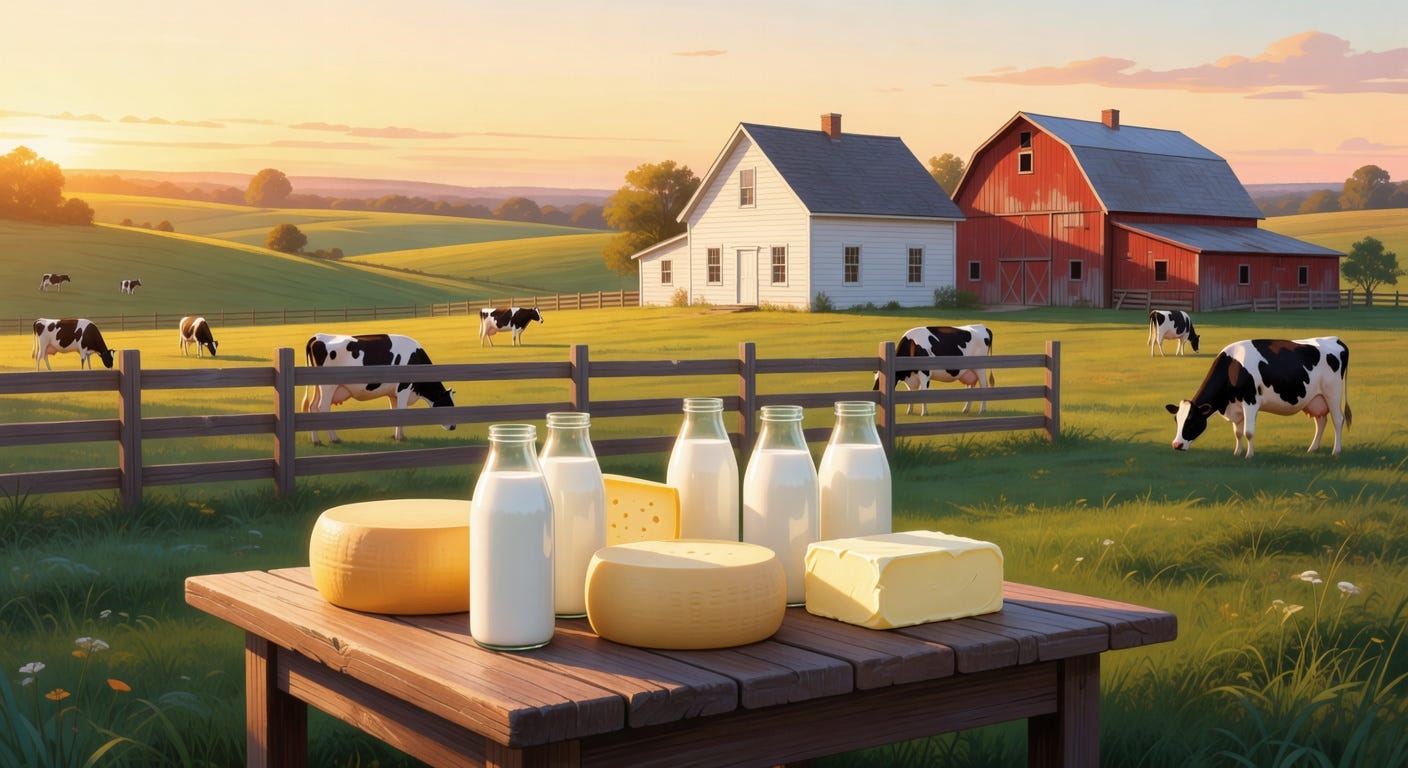
That’s not a quaint farm stand selling jars of honey. Miller’s operation sources from multiple Amish farms and ships nationwide via FedEx and UPS. The product catalog reportedly grew to over 1,200 items: raw milk, raw butter, kefir, cream, yogurt, bone broth, grass-fed beef, free-range poultry, fermented vegetables, raw cheese, and eggs from chickens that actually see the sun.
The private membership model is the key innovation. Miller’s farm doesn’t sell to “the public.” You sign a membership contract acknowledging that you understand the products are unprocessed and uninspected by government agencies, and that you’re choosing to buy them anyway. It’s a direct, consensual transaction between producer and consumer, with no middleman and no bureaucratic permission slip.
This is agorism in its purest form: a parallel economy built on voluntary exchange, operating outside the regulatory apparatus that exists, ostensibly to “protect” you from the food you’ve specifically chosen to eat.
What the Government Did About It
The feds noticed Miller around 2016, when the FDA and CDC linked a Listeria outbreak (one death in Florida, one illness in California) to raw milk from his farm. The USDA’s Food Safety and Inspection Service demanded access to inspect his meat and poultry operations. Miller refused. FSIS sued to enforce the subpoena and won access in November 2016.
What followed was a grinding legal war that lasted seven years.
The Department of Justice secured a permanent injunction in 2019, barring Miller from selling non-federally-inspected meat and poultry. Miller kept selling. The government got a consent decree in April 2020. Miller was found in contempt in 2021. A second consent decree followed in December 2022. Then a third, in August 2023, which finally closed the federal case after Miller paid roughly $85,000 in fines and costs.
According to his attorney, internal USDA documents revealed agents laughing about putting the farmer in prison. Federal judges, to their credit, were less enthusiastic about caging a man whose crime was selling milk.
Then the state of Pennsylvania showed up.
The Raid
On January 4, 2024, agents from the Pennsylvania Department of Agriculture raided Miller’s farm under an administrative search warrant, backed by State Troopers. The trigger: two out-of-state children had gotten sick, reportedly from E. coli in raw eggnog.
The PDA’s evidence was thin. The eggnog tested positive for shiga toxin-producing E. coli (STEC), but the department never tested whether the strain found in the sick child matched the strain in the eggnog. They didn’t check for other contamination sources. The Michigan child’s family had their Miller products tested independently. Every result came back negative.
No matter. The PDA detained an estimated $100,000 worth of food on Miller’s farm and ordered it all destroyed. On January 25, a judge granted the state an ex parte injunction, meaning Miller and his attorney had no opportunity to present their side before the order was issued. Tyranny.
“Why Doesn’t He Just Get a Permit?”
This is the question everyone asks, and it’s the question that reveals how the regulatory game actually works.
Pennsylvania allows raw milk sales with a permit. There are 114 dairies operating legally in the state under those permits. Judge Thomas Sponaugle, at a February 2024 hearing, asked this exact question: “Why doesn’t he just go get a permit?“
Never mind that peaceful, consenting adults should need no permit to sell farm produce!
Miller’s attorney Robert Barnes explained: a raw milk permit in Pennsylvania limits you to selling only raw milk and aged cheese. No butter. No kefir. No yogurt. No cream. No smoothies. Getting the permit would mean abandoning most of what his 4,000+ members actually want.
The PDA agreed almost five years ago to issue regulations legalizing raw butter sales. They still haven’t done it. The permit system isn’t a reasonable accommodation. It’s a trap: accept the license, lose the business.
This is how regulatory capture works in practice. The rules aren’t written to keep you safe. They’re written to keep you small, compliant, and dependent on a system that processes 10 billion pounds of meat a year through four companies while sending armed agents after an Amish farmer with a butter churn.
The Fight Back
On February 29, 2024, hundreds of supporters rallied outside the Lancaster County courthouse. Barnes submitted 354 written testimonials from food club members and brought four to testify in person about how Miller’s food had improved their health.
Medical biologist Margaret Coleman, who formerly worked for the USDA, reviewed all 33 samples the PDA took from the farm. Eight showed evidence of harmful microbes. But Coleman testified that the percentages present were “well below” harmful limits even by the FDA’s own standards.
The judge kept the raw milk injunction in place for in-state sales, but amended it to allow Miller to sell all other foods. Then, in January 2025, Commonwealth Court Judge Stacy Wallace delivered a significant win: Miller can continue selling raw milk to out-of-state customers while the PA lawsuit proceeds. The reasoning? Blocking out-of-state sales would cause “substantial harm to his business.”
Since the January 2024 raid, Miller’s GiveSendGo campaign has raised over $300,000. His goal is $800,000.
Bigger Than One Farm
Miller’s case landed at a peculiar cultural moment. The Make America Healthy Again movement turned raw milk into a political symbol. Rep. Thomas Massie (R-KY) jumped to Miller’s defense. Donald Trump Jr. said the feds should focus on pedophiles, not dairy farmers. In March 2026, Massie and Rep. Chellie Pingree (D-ME) introduced H.R. 7880, the Interstate Milk Freedom Act, a bipartisan bill that would prohibit federal interference with interstate raw milk sales. Massie has introduced versions of this bill since 2014. This is the sixth attempt.
The raw milk market doesn’t care whether Congress acts. Weekly sales grew 21% in 2024 over the prior year. Q4 2024 sales were up 18%. Thirty-two states now allow some form of raw milk sales. Consumer demand is building the legal framework from the ground up, one purchase at a time.
But Miller represents something beyond raw milk. His private membership model is a template. The logic is simple: consenting adults don’t need a permission slip to eat. If a farmer raises food and a buyer wants it, the transaction is between them. The government isn’t a party to the contract. It isn’t invited.
Lancaster County, with its dense network of Amish farms operating outside the industrial food chain, is a working proof of concept. They’re families who have been doing this for centuries, feeding their communities real food, raised on real land, traded through real relationships, without asking anyone’s permission.
The state spent a decade and untold taxpayer dollars trying to crush one farmer’s food club. The food club grew from 2,000 members to over 4,000. The farmer is still selling. And the next Amos Miller is already out there, somewhere in America, filling coolers with raw milk and loading them onto a truck.
The government can raid one farm. It can’t raid ten thousand kitchens.
Sources:
- National Agricultural Law Center: Amos Miller and the Regulation of Raw Milk
- Real Milk: Amos Miller Case Updates (Dec 2024)
- Food Safety News: Appeals Court Says Amos Miller Can Sell Raw Milk Across State Lines (Jan 2025)
- DOJ: Lancaster County Farm Agrees to Consent Decree (April 2020)
- Food Safety News: Amos Miller Exits Federal Court (Nov 2023)
- GetRawMilk.com: Amos Miller Interstate Distribution (Oct 2024)
- Rep. Massie: Interstate Milk Freedom Act H.R. 7880 (March 2026)
Inspiring!
Good on him!