

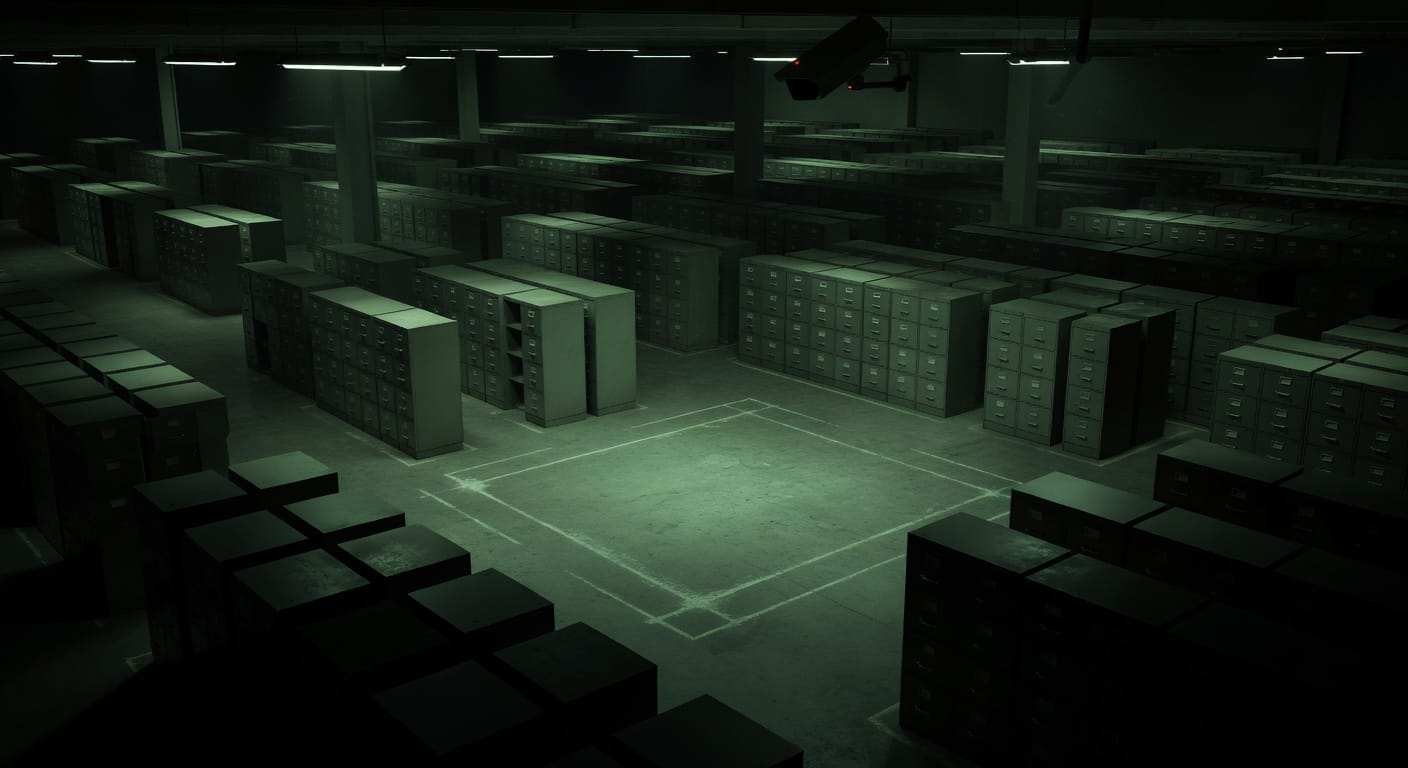
The FBI built a digital system that makes its own records invisible. Not classified. Not redacted. Invisible. Search for them and the system tells you they don’t exist.
This week, the scope of that system finally started to come into focus. And it’s worse than the headline suggests.
How to Make a File Disappear
The FBI’s case management system, SENTINEL, is supposed to be the central nervous system for every investigation the Bureau runs. Congressional oversight requests, Freedom of Information Act inquiries, criminal defense attorneys seeking exculpatory evidence, internal agents researching related cases: it all runs through SENTINEL.
The system has a normal classification tier called “Restricted Access,” where you can see a file exists but need clearance to open it. Standard stuff.
Then there’s a tier nobody outside FBI leadership knew about until last year: “Prohibited Access.”
A declassified 2019 FBI memo explains how it works: “When search terms that exist in the Prohibited Access-status cases are searched in Sentinel, the particular search will receive a false-negative Sentinel search response.”
Not “access denied.” The system actively lies. The files are ghosts.
Only a small circle around the FBI Director and Deputy Director controls which files become ghosts. Everyone else, including other FBI agents, gets told nothing is there.
The Scope
Matt Taibbi’s Racket News exclusive yesterday reported the cache may contain as many as a thousand distinct case numbers dating back to at least 1999, spanning multiple presidencies. Senate Judiciary Chairman Chuck Grassley confirmed that Attorney General Bondi and FBI Director Patel have begun turning material over to Congress.
But the political headlines barely scratch the surface of what this system means.
Innocent People May Be in Prison
Here’s the angle that should terrify everyone, regardless of political tribe.
Under the Brady rule, prosecutors are constitutionally required to turn over exculpatory evidence to criminal defendants. When defense attorneys request that evidence, FBI agents search SENTINEL for relevant material.
If relevant evidence sits in a Prohibited Access file, the agents don’t even know it exists. As legal analyst Margot Cleveland put it: “Agents pulling Brady material to comply WITH THE CONSTITUTION will not even know there are potentially exculpatory materials they should be providing.”
That means for potentially 25 years, defendants in federal criminal cases may have been convicted without access to evidence that could have cleared them. Not because a prosecutor chose to hide it, but because the filing system itself was rigged to say the evidence didn’t exist.
The same logic applies to every FOIA request filed since the system was created. Every congressional oversight demand. Every Inspector General investigation. The FBI’s answer to all of them was effectively: “We searched and found nothing.” That may have been technically true from the agent’s perspective. But the system was lying to the agents, too.
The Pattern: From Hoover’s Cabinet to Digital Ghosts
The FBI has always had secret files. What changes is the technology.
J. Edgar Hoover kept “Official and Confidential” files for decades: a personal blackmail vault containing dirt on politicians and journalists. Ronald Kessler, who reviewed what survived, concluded they “could have been gathered for no other purpose than blackmail.”
COINTELPRO (1956-1971) targeted civil rights leaders, antiwar activists, and political dissidents with forged documents, infiltration, and IRS audits.
The Church Committee was supposed to end all this in 1975. It didn’t. It just pushed the secrecy deeper into bureaucratic infrastructure.
After 9/11, the transformation accelerated. The FBI shifted from a law enforcement agency that catches criminals to a domestic intelligence service that collects information for its own sake. Whistleblowers like Garrett O’Boyle, Steve Friend, and others describe being pulled off real enforcement work and reassigned to constitutionally questionable surveillance.
Prohibited Access is the natural endpoint of that evolution. When your primary mission is collecting secrets, you eventually need a system for keeping secrets about your secrets.
What’s Already Leaked Out
Even before the full cache is turned over, the files that have surfaced show the system’s reach.
The FBI’s Arctic Frost investigation (the precursor to Jack Smith’s prosecution of Trump) used 197 subpoenas classified as Prohibited Access. Among the targets: phone records of eight sitting Republican senators, obtained in 2023. That information was found in a Prohibited Access file only because Grassley’s office specifically demanded it. Standard SENTINEL searches would have returned nothing.
Patel himself claims the FBI buried subpoenas of his personal phone records in Prohibited Access files “using flimsy pretexts” while he was a private citizen.
And the Mueller investigation’s SA Walter Giardina allegedly wiped his FBI-issued laptop outside standard protocol, while team member Andrew Weissmann wiped his government phone multiple times. When the evidence itself is in ghost files and the devices that held it are conveniently erased, you’re looking at a system designed from the ground up to be unaccountable.
Why Reform Won’t Fix This
The comfortable conclusion is that this is a fixable scandal. Release the files, fire the bad actors, pass some reforms.
History suggests otherwise.
The Church Committee “reformed” intelligence oversight in 1975. The FBI kept running domestic surveillance programs. The 9/11 Commission mandated “information sharing.” The FBI responded by building a system that shares information with nobody. Every previous reform left the core architecture of secrecy intact while the agencies built newer, better vaults around it.
The deeper problem is structural. Any institution with the power to classify its own activities and the incentive to avoid accountability will eventually build something like Prohibited Access. It doesn’t require a conspiracy. It requires a bureaucracy staffed by people whose careers depend on secrecy, given digital tools that make secrecy frictionless.
“If it weren’t for whistleblower disclosures to my office, the very existence of the FBI using ‘Prohibited Access’ files for some investigations would have remained in the dark,” Grassley said. That’s not a reassuring statement. That’s an admission that the entire oversight apparatus of the U.S. government failed, and the only thing that worked was individuals willing to risk their careers.
The question isn’t whether these particular files get released. It’s whether the system that produced them gets dismantled, or just renamed.
Sources:
- Grassley: Prohibited Access Investigation (Senate Judiciary Committee)
- Declassified FBI Analysis re: Nellie Ohr (Senate.gov)
- FBI’s Secret Stash Finally Uncovered (Racket News, March 6, 2026)
- Arctic Frost: FBI Spied on Eight Republican Senators (Senate Judiciary Committee, October 2025)
- FBI Prohibited Access: Brady Implications (Eagle Observer, June 2025)
- Herridge: Prohibited Access Files (Catherine Herridge Reports, June 2025)
- FBI Whistleblower Testimony (PBS, May 2023)
- Hoover’s Secret Files (The Daily Beast/Ronald Kessler)
- COINTELPRO (Wikipedia)
- Church Committee (Senate.gov)Loading...
Great Exposure - Thank you!
Disgusting Zio-Nazis have Controlled America for decades!