Everybody works for their food. Even if you don’t directly produce it.
How much of your time goes towards paying for groceries? If you work 40 hours a week, get paid $20 an hour, and spend $200 a week in groceries and eating out, that’s 10 hours a week you spent working for food.
And that’s for store-bought pesticide-laden food that was picked 3 weeks ago in a different country and has lost most of its nutritional value on the way to you. And the sucker-punch? The soil it was grown in is depleted to begin with.
The average store-bought tomato has 1/8th the nutritional value the tomato your grandmother grew.
What if instead you planted a garden? Raised your own chickens? All of that can be done in less than 10 hours a week.
You could grow your own organic, freshly picked produce.
Ferment it yourself and get probiotics, instead of buying vinegar-soaked shelf-stable pickles that are dead.
You could substitute a significant amount of your own freshly grown produce for what you buy at the store, save money, work less (or save more), and become less dependent on long supply chains.
Better health, more resilience, more money saved, more fresh air and vitamin D from being out in the sun. What’s not to like?
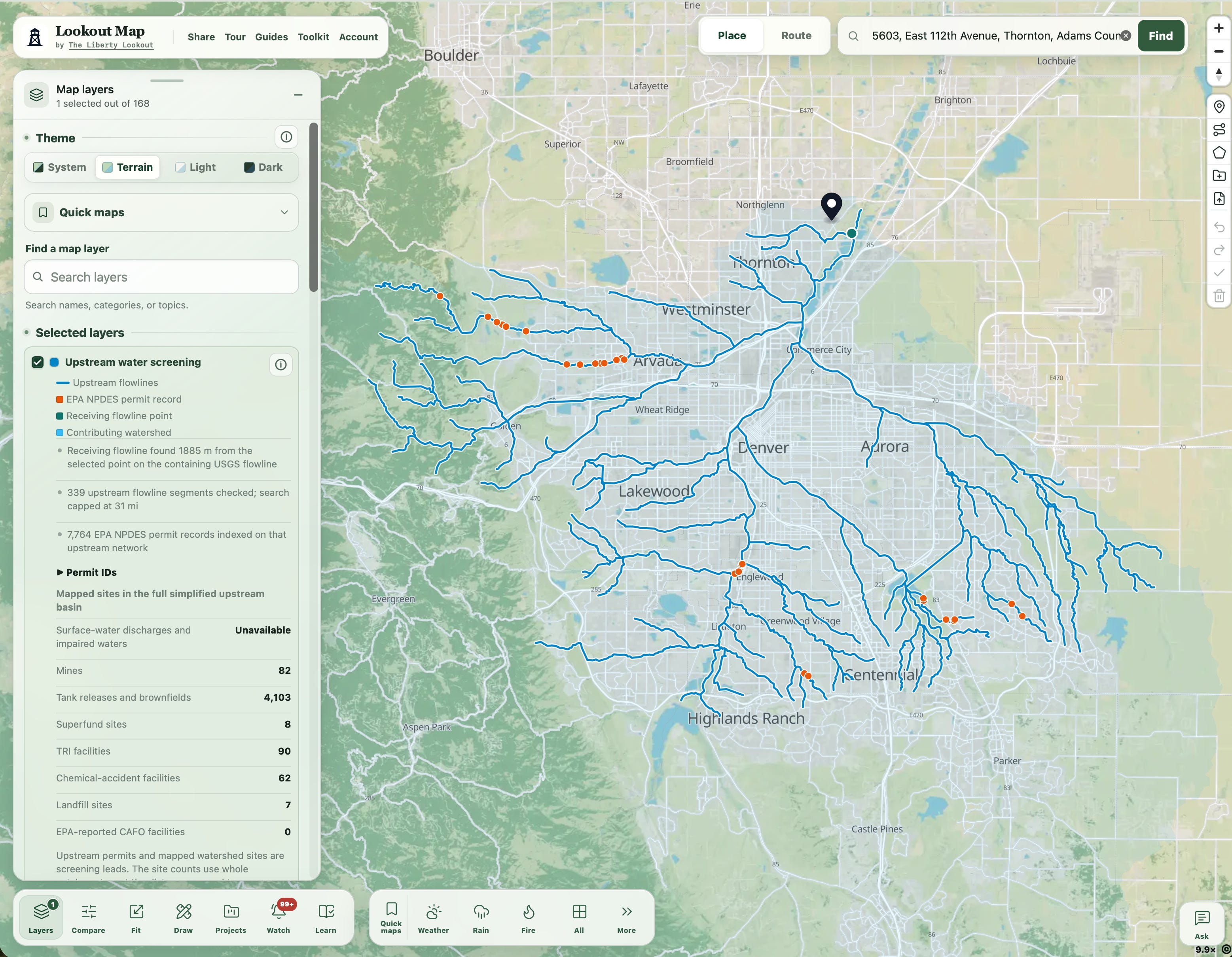
This is a delicious salad we made this morning from our own cucumbers and tomatoes. The olive oil and feta cheese we bought, but we have sheep, and next year I plan to milk them and make my own cheese. We’ll see how that goes!
Want to support my work? Becoming a supporter unlocks more features on Lookout Map. Use the Lookout Map to relocate and find your ideal off-grid homestead, model nuclear fallout in your state, route around Flock cameras, and more.
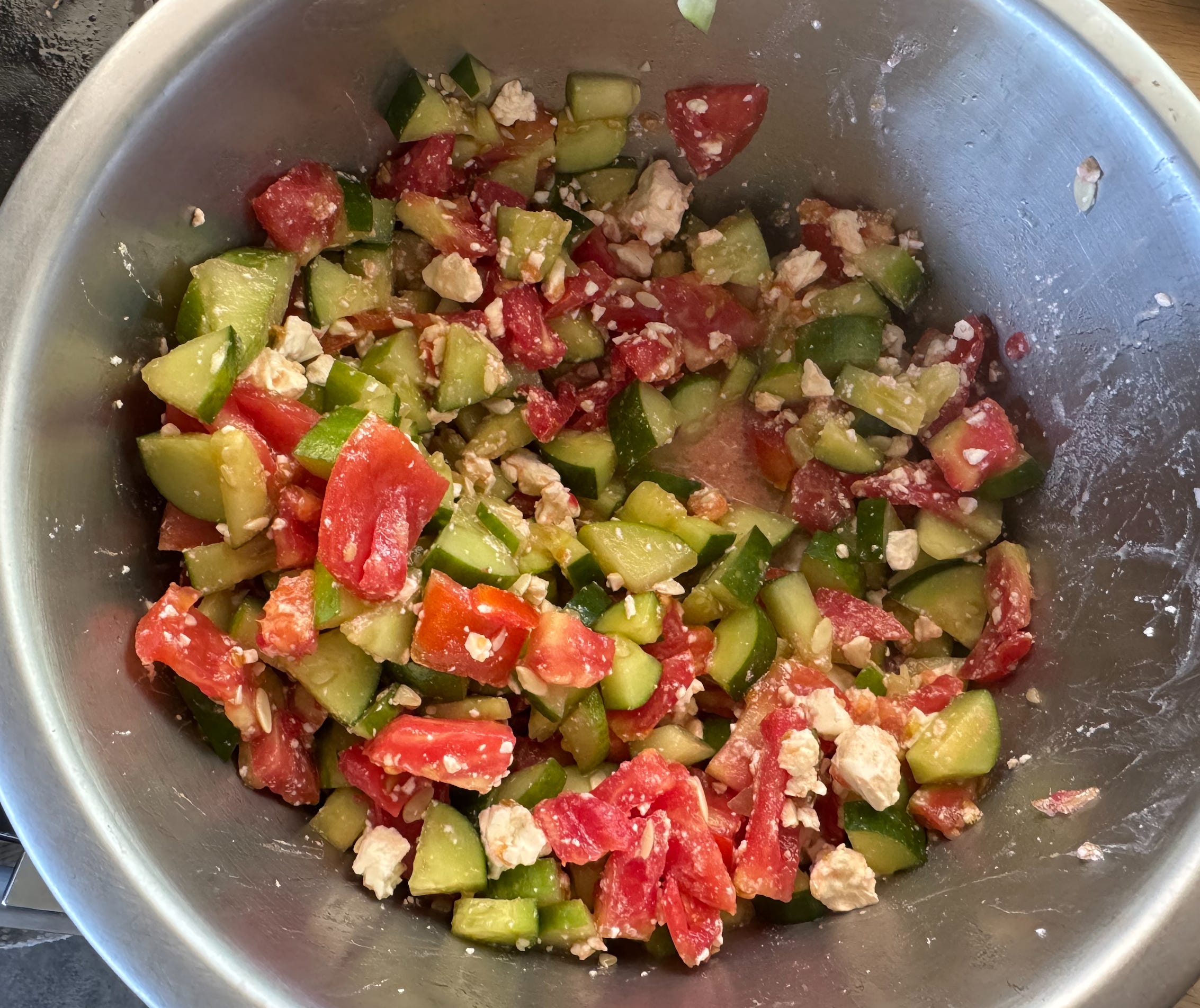
Lookout Map has a new feature - Upstream water screening.
Analyze any address and we use USGS data to figure out the contributing watershed upstream of that address, including any rivers or creeks, and then look through EPA data on superfund sites, permitted chemical-releasing facilities, mines, landfill sites, and more - that would dump into that watershed.
You can now at a glance figure out how at-risk your water supply would be.