

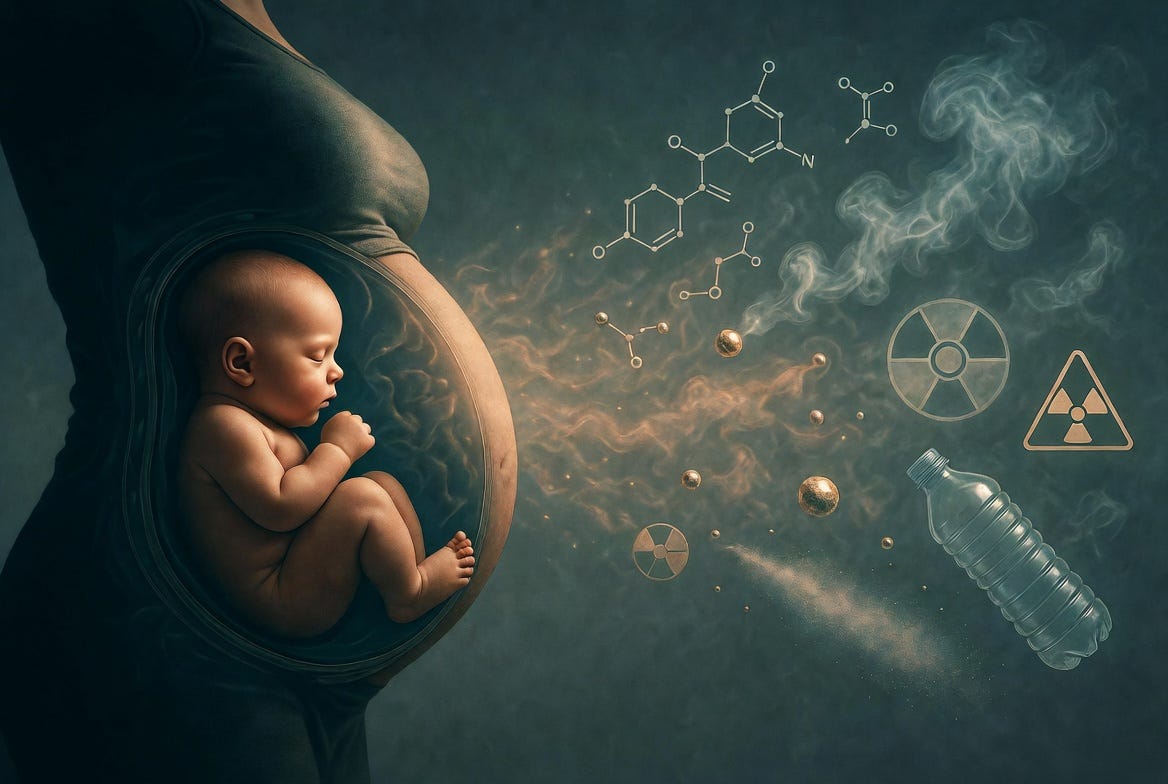
When a debilitating condition goes from 1 in 150 children to 1 in 31 in 20 years, you are looking at a civilizational event.
In its latest Autism and Developmental Disabilities Monitoring report, the CDC put autism prevalence among American 8-year-olds in 2022 at 32.2 per 1,000, or 1 in 31. And this is not simply a larger population of eccentric math kids who hate eye contact. In the same report, 39.6% of the children identified with autism were also classified as having an intellectual disability.
No industrial society produces this many neurologically damaged children by accident. It does not happen because teachers got better at spotting it, and it does not happen because a few pediatricians sat through a seminar.
Diagnosis did change. Screening got better, definitions broadened, and doctors got faster at identifying kids who would have been missed a generation ago. That part is real, and it explains some of the rise.
It does not explain the whole rise.
A California study by Peter Bearman and Marissa King found that diagnostic change accounted for about 26.4% of the increase in autism caseload between 1992 and 2005 through one documented pathway. Another California analysis found that younger age at diagnosis could explain about 12% of the increase, and the inclusion of milder cases about 56%, so better paperwork accounts for a chunk of it. Something else accounts for the rest. Which leaves the question no institution wants to answer: what changed in the developmental environment?
Vaccines are not the whole picture
The autism debate has spent years stuck on one topic: vaccines.
But I know a very autistic child whose parents never exposed him to a single vaccine. So what happened?
A 2017 evidence-based review in Molecular Autism concluded that 40% to 50% of autism liability may be environmental, and in the same breath found that the evidence did not support vaccination or thimerosal as drivers of autism risk.
Of course, there are countless flawed studies on the topic - they test one piece at a time, MMR, thimerosal, aluminum, and each comes back clean, but nobody has run the obvious study: fully vaccinated children against completely unvaccinated ones, across the whole schedule, with real medical records. That comparison is missing, and the institutions that could fund it would rather not know.
The developmental environment got more hostile
The environmental signals that keep showing up in the autism literature are not dramatic. They are the everyday exposures modern life treats as background scenery, but it all adds up.
Air pollution
A 2021 meta-analysis in Environmental Pollution found that maternal exposure to air pollutants was associated with higher autism risk in newborns, and that each 5 μg/m3 increase in PM2.5 raised the risk across every model the authors ran. A 2016 systematic review in PLoS One rated the overall evidence as “moderate” and found the strongest link between prenatal particulate matter exposure and autism.
This is the air. Not some chemical spill in a river town, but the ordinary air a pregnant woman is expected to breathe without a second thought. We have normalized poisoned air so thoroughly that you smell exhaust, shrug, and keep walking. A developing fetus has no such option.
Heavy metals and mercury
A 2023 systematic review found that children with autism carried higher concentrations of cadmium, lead, arsenic, and mercury than controls across several sample types, while noting substantial variation between regions and specimen types. A 2017 mercury meta-analysis found significantly higher mercury in whole blood, red blood cells, and brain tissue in autistic patients than in controls.
Children are exposed to stacks, not single causes
Children are not exposed to one thing. They are exposed to stacks.
Air pollution. Pesticides. Plastics and plasticizers. Heavy metals. Ultra-processed food. Pharmaceutical residues. Chronic maternal stress. Metabolic dysfunction. Indoor chemical soup. Bad sleep, bad light, and too little sunlight. Then we act surprised when a vulnerable subset of children comes out developmentally impaired.
Pollute the developmental environment in ten different ways and the result will not announce itself in one clean press release. It shows up as a generation of children who are more fragile, more dysregulated, more delayed, more overstimulated, and more chemically burdened across a dozen different measures. Autism is one of the most visible forms that damage takes.
The money is in management, not prevention
Once the damage is here, the incentives get worse.
A rising autistic population means rising demand for evaluations, aides, speech therapy, occupational therapy, behavioral therapy, classroom accommodations, special-education bureaucracy, psychiatric oversight, and in many cases lifelong care. An entire administrative economy grows up around that demand, and it grows fast.
And that economy protects itself. Captured systems do not like upstream explanations, because upstream explanations are expensive for the wrong people. If the real fix is cleaner air, cleaner water, cleaner food, cleaner building materials, and less chemical exposure during pregnancy, then a lot of powerful institutions turn out to be standing inside the crime scene instead of outside it. Expanding services is easier than admitting the economy itself is producing damaged children.
None of that makes therapists or teachers the villains. Most of them are trying to help families survive a disaster they did not create. The villain is a social order that poisons upstream, bills downstream, and calls the arrangement “care.”
The rise in autism is yet another biological warning, one more sign that the mainstream lifestyle is not just decadent or spiritually empty but physically hostile to the development of healthy children.
What a family can actually do
1. Treat preconception and pregnancy as the window that matters most
If you can only reduce exposures in one stretch of life, reduce them here. Cleaner food, cleaner water, fewer fragrance products, less plastic touching food, and as much distance from obvious spray and exhaust as your life allows.
2. Filter the water you drink and cook with
If a family can make only one infrastructure upgrade, this is near the top. You have already seen in this series what turns up in municipal water and consumer products stream.
3. Cut the household chemical load
Fragrance-heavy products, vinyl, plastic food storage, aggressive cleaners, stain-resistant coatings, and cheap synthetics are exposure routes, not just decor. See part 10 of the series.
4. Take indoor air seriously
Open windows when the outdoor air is good and filter it when it is not. Pay attention to traffic corridors, industrial neighbors, and sealed modern buildings that trap everything inside. Better yet, move out of the cities.
Sources
- CDC, ASD Prevalence Among Children Aged 4 and 8 Years, ADDM Network, 2022 (MMWR, 2025)
- Hertz-Picciotto & Delwiche, The Rise in Autism and the Role of Age at Diagnosis (2009), Epidemiology
- Taylor et al., Vaccines are not associated with autism: a meta-analysis (2014), Vaccine
- Hviid et al., Thimerosal-containing vaccine and autism (2003), JAMA
- Lam et al., Multiple Airborne Pollutants and Autism (2016), PLoS One
- Wang et al., Maternal Exposure to Pesticides and Autism Risk (2022), J. Autism Dev. Disord.
- Ding et al., Heavy metals exposure and child autistic disorder (2023), Frontiers in Pediatrics
- Shin et al., Prenatal phthalates and autism in the MARBLES study (2018), Environmental Health