

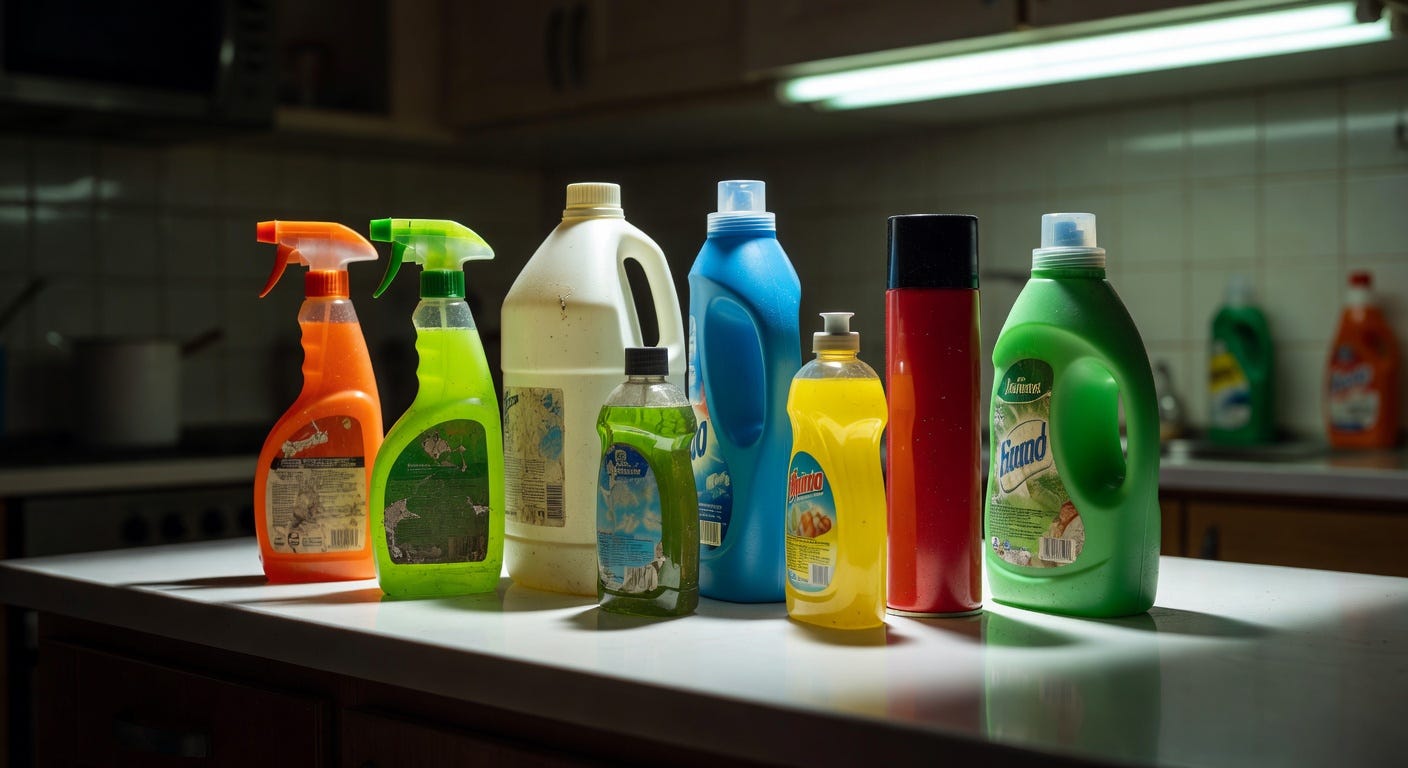
The 20-Year Cleaning Study Nobody Talks About
In 2018, researchers at the University of Bergen in Norway published a study that should have made global headlines. It didn’t.
They followed 6,235 people for 20 years as part of the European Community Respiratory Health Survey, measuring lung function decline over time. The finding: women who regularly used cleaning sprays or worked as professional cleaners experienced lung function decline equivalent to smoking 20 cigarettes a day for the same period.
Not a slight increase in risk. Not a marginal concern. Twenty cigarettes a day. For 20 years. From cleaning your house.
The study, published in the American Journal of Respiratory and Critical Care Medicine, found that cleaning sprays were associated with an accelerated decline in FEV1 (forced expiratory volume, the standard measure of how much air your lungs can push out). The lead researcher, Øistein Svanes, explained that the chemicals in cleaning products cause persistent damage to the mucous membranes lining the airways, leading to chronic airway remodeling. Your lungs don’t recover. The damage accumulates, just like it does from tobacco smoke.
And that’s just what happens to your lungs. The chemicals in your cleaning products, laundry detergent, dish soap, personal care products, and clothing are entering your body through your skin, your gut, and your airways every single day. Most of them have never been independently tested for long-term safety. Many are already linked to cancer, endocrine disruption, and reproductive harm.
This installment covers all of it: what’s in these products, how it gets into your body, and specific alternatives for every category.
Your House Has Worse Air Quality Than a Highway
Here’s a number that puts the whole thing in perspective. The EPA’s own Total Exposure Assessment Methodology (TEAM) studies found that concentrations of common organic pollutants are 2 to 5 times higher inside homes than outside, regardless of whether the home was in a rural area or next to an industrial zone. In some cases, indoor VOC levels are up to 10 times higher than outdoor levels.
Every time you spray a cleaning product, use a scented laundry detergent, or plug in an air freshener, you’re adding volatile organic compounds to your indoor air. And because modern homes are sealed tight for energy efficiency, those chemicals stick around.
A meta-analysis of 21 studies published in Occupational & Environmental Medicine in 2021 found a 50% increased risk of asthma among people who use cleaning products regularly. A 10-country study cited by the Environmental Working Group found that people who used spray cleaners just once a week had a 30 to 50% increased risk of developing asthma over the study period.
And these aren’t industrial chemicals in a factory. These are the products sitting under your kitchen sink.
The Fragrance Loophole: How They Hide Dozens of Chemicals in One Word
If you’ve ever looked at an ingredient label on a cleaning product, shampoo, or candle and seen the word “fragrance,” you’ve encountered one of the most significant regulatory loopholes in consumer product safety.
Under current FDA rules, companies can list “fragrance” as a single ingredient. It’s protected as a trade secret. That one word can represent a blend of dozens of undisclosed chemicals, and the company has no obligation to tell you what they are.
The Environmental Working Group tested 17 name-brand fragrances and found an average of 14 secret chemicals per product not listed on the label. The International Fragrance Association lists more than 3,500 fragrance chemicals in use today, and according to EWG’s Skin Deep database, 3,163 ingredients can hide behind that single word.
This matters because many fragrance chemicals are phthalates, synthetic musks, and other compounds linked to endocrine disruption. Dibutyl phthalate, for instance, is an endocrine disruptor and developmental toxicant that harms male reproductive system development and can cause early puberty in boys. It can legally hide behind the word “fragrance” on a label, and often does.
The fragrance loophole applies to nearly every scented consumer product: laundry detergent, dish soap, cleaning sprays, shampoo, body wash, lotion, deodorant, candles, air fresheners. If it smells like something and lists “fragrance” as an ingredient, you’re inhaling or absorbing chemicals that are probably bad for your health.
What’s Coming Out of Your Dryer Vent
In 2011, Anne Steinemann, a professor at the University of Washington, published the first study to analyze the chemical emissions coming out of residential dryer vents when using popular scented laundry products.
Her team found more than 25 volatile organic compounds in the dryer exhaust, including seven classified as hazardous air pollutants. Two of those, acetaldehyde and benzene, are classified by the EPA as carcinogens with no established safe exposure level. Benzene causes leukemia and other blood cancers. The other hazardous chemicals identified included ethyl benzene, methanol, xylene, and toluene.
Here’s a detail that puts the scale in context: Steinemann’s team estimated that the acetaldehyde emissions from just one popular brand of laundry detergent in the Seattle area were equivalent to 3% of total acetaldehyde emissions from all automobiles in the region. From laundry detergent.
The products labeled “green,” “natural,” and “organic” were not meaningfully better. They emitted just as many hazardous chemicals as the conventional ones. Those labels are unregulated marketing terms, not safety certifications.
A 2000 study in the journal Toxicological Sciences found that mice exposed to emissions from five commercial fabric softener products experienced sensory and pulmonary irritation and airflow limitation. The thing you’re using to make your clothes smell pleasant is literally irritating the lungs of test animals.
And here’s what makes this especially insidious: those chemicals don’t stay in the dryer. They coat your clothes. The residue from laundry detergent, fabric softener, and dryer sheets sits against your skin all day long. Your skin is the largest organ in your body, and it absorbs what’s pressed against it. Every shirt, every pair of pants, every pillowcase you sleep on for eight hours is delivering whatever survived the rinse cycle directly into your body.
The Dishes You Eat Off Are Coated in Chemicals
In 2022, a research team led by Cezmi Akdis at the University of Zurich published a study in the Journal of Allergy and Clinical Immunology that examined what dishwasher detergents and rinse aids leave behind on “clean” dishes.
The results were striking. Detergent residue from professional dishwashers left significant amounts of cytotoxic and epithelial barrier-damaging rinse aid on washed, ready-to-use dishware. The culprit: alcohol ethoxylates, a common component of rinse aids.
These chemicals damaged the intestinal epithelial barrier in lab tests, leading to cellular toxicity, tight junction disruption (the “seals” between cells in your gut lining), and immune activation. According to the University of Zurich press release, Akdis stated that the effect of alcohol ethoxylates on intestinal cells could “plausibly trigger a number of inflammatory diseases in humans.”
The study found that commercial dishwashers were leaving twice the concentration of rinse aid residue that would begin to cause cellular damage. Every meal eaten off those plates delivers a microdose of gut-damaging detergent directly into the digestive system.
This isn’t just about professional kitchens. Residential dishwashers use the same rinse aid chemistry. The residue is on your plates, your glasses, your silverware, and your children’s dishes.
The Quats: Cleaning Chemicals That Destroy Fertility
Quaternary ammonium compounds, commonly called “quats,” are found in a wide range of household disinfectants, all-purpose cleaners, and antibacterial products. Their use exploded during COVID, as the disinfecting frenzy pushed these chemicals into every corner of our lives.
The research on their reproductive effects is alarming.
A 2014 study in Reproductive Toxicology by Melin et al. demonstrated that exposure to common quaternary ammonium disinfectants (ADBAC and DDAC, the two most common quats in household cleaners) decreases fertility in mice, targeting both male and female reproductive processes.
A 2024 study published in Reproductive Toxicology confirmed that QAC exposure alters endocrine hormones including FSH, LH, estrogen, and progesterone, and disrupts spermatogenesis (sperm production). The study found that fertilization wasn’t affected immediately after exposure, but was decreased after a 10-day rest period, suggesting the damage was to the reproductive system itself, not just a direct toxic effect on existing sperm.
The NCBI StatPearls review notes that prolonged QAC exposure in nonhuman mammals leads to endocrine disruption, immune dysfunction, and reproductive toxicity. A 2023 paper in Environmental Science & Technology designated quats as “chemicals of emerging concern” and noted that a 1975 patent titled “Method for the Control of Fertility” demonstrated QACs are embryocidal, ovicidal, and spermicidal.
To be clear: the chemicals marketed as keeping your counters clean are, in laboratory settings, destroying the ability of animals to reproduce. And during COVID, we sprayed them on every surface, pumped them through HVAC systems, and bathed our hands in them dozens of times a day.
168 Chemicals Before Breakfast
Personal care products represent another massive vector of daily chemical exposure, and it’s one most people never think about because the chemicals are going directly onto their skin.
According to the Environmental Working Group, the average American woman uses 12 personal care products every day, containing 168 different chemicals. Men use an average of 6 products containing 85 chemicals. A 2025 study in Nature’s Scientific Reports estimated that women may apply up to 515 different chemicals to their skin daily.
Since 2009, 595 cosmetics manufacturers have reported using 88 chemicals linked to cancer, birth defects, or reproductive harm in more than 73,000 products. Many of these products go directly onto the skin, which readily absorbs what’s applied to it. Parabens and phthalates, both common in personal care products, have been detected in the blood and urine of people who use these products regularly.
Congress last passed cosmetics legislation in 1938. The Food, Drug, and Cosmetic Act devotes exactly two pages to cosmetics regulation out of 829 total pages. The FDA has essentially no authority to review chemicals in personal care products before they reach the market. And even if they did, they’re a captured agency and beyond being able to help anyone.
The Hidden Carcinogen That Isn’t on the Label
One of the most widespread contaminants in personal care products isn’t even an intentional ingredient. 1,4-dioxane is a byproduct of the ethoxylation process used to manufacture surfactants like sodium laureth sulfate (SLES), the chemical that makes your shampoo, body wash, and dish soap foam up.
The EPA classifies 1,4-dioxane as a “likely human carcinogen.” The National Toxicology Program lists it as a “reasonably anticipated carcinogen.” And according to EWG’s Skin Deep database, 22% of over 25,000 cosmetic products contain it.
Because 1,4-dioxane is a contaminant rather than an added ingredient, it doesn’t appear on labels. You can’t avoid it by reading the ingredient list. It’s present in shampoos, shower gels, dish soaps, laundry detergents, toothpastes, mouthwashes, and hair dyes. The only reliable way to avoid it is to avoid products containing ethoxylated surfactants (anything with “eth” in the name, like laureth, ceteareth, or PEG compounds).
Endocrine Disruption: The Real Cost
Phthalates and parabens, ubiquitous in personal care products, are well-documented endocrine disruptors. The National Institute of Environmental Health Sciences reports that phthalate exposure is associated with decreased gestational age and increased risk of preterm birth. A study of women ages 18-44 found that increased exposure to a common phthalate was associated with twice the odds of developing endometriosis.
Parabens bind to estrogen receptors and mimic the activity of natural estrogen in the body. Research published in Toxicology and Environmental Health Sciences links phthalate and paraben exposure to disruptions in thyroid gland secretion, sperm production, and reproductive hormone secretion, causing infertility, carcinogenesis, and pregnancy-related complications.
The Endocrine Society notes that endocrine-disrupting chemicals including phthalates can mimic or block the effects of male and female sex hormones, affecting reproductive health at the most fundamental biological level.
If you’ve been following this series, this connects directly to Parts 1 and 2 on the fertility collapse and chemical castration. The personal care products people use every day are one of the primary delivery mechanisms for the very chemicals driving reproductive decline.
Your Clothes Are Made of Plastic
Here’s a fact that might change how you think about your wardrobe: polyester now makes up 59% of total global fiber production, and 88% of that polyester is derived from petroleum. Polyester is polyethylene terephthalate (PET). It is, materially, the same plastic used to make soda bottles.
When you wear a polyester shirt, you’re wearing a thin layer of plastic against your skin. When you wash it, it sheds microplastic fibers into the water supply. When you sweat, your body heat can cause chemicals to leach out of the fabric and absorb through your skin. Synthetic fabrics trap heat and moisture in a way that natural fibers don’t, creating conditions that can increase the rate of chemical migration from fabric to skin.
But polyester is just the baseline. The chemical treatments applied to clothing add another layer of exposure.
PFAS: The “Forever Chemicals” in Your Jacket
Per- and polyfluoroalkyl substances (PFAS) are used in clothing marketed as water-resistant, stain-resistant, or weatherproof. These are the same “forever chemicals” linked to cancer, thyroid disease, immune suppression, and reproductive harm, and they’re called “forever chemicals” because they don’t break down in the environment or in your body.
If your rain jacket, hiking pants, work uniform, or athletic wear is marketed as water-repellent or stain-proof, it very likely contains PFAS. The same goes for stain-resistant carpets, upholstery, and any fabric with a slick, water-beading finish.
A small number of manufacturers have started moving away from using these, and they’re pretty vocal about it, so if your jacket is PFAS-free, it’ll be on the label. Otherwise, assume it’s contaminated.
Formaldehyde: The Carcinogen in “Wrinkle-Free” Shirts
Clothing labeled “wrinkle-free,” “permanent press,” “no-iron,” or “easy care” is typically treated with formaldehyde-based resins. Formaldehyde is classified as a Group 1 carcinogen, meaning there is sufficient evidence that it causes cancer in humans.
Beyond cancer risk, formaldehyde causes skin irritation and allergic contact dermatitis. If you’ve ever noticed that new “permanent press” dress shirts make your skin itch or your neck red, formaldehyde is the likely cause.
Fast Fashion: A Chemical Gamble
The fast fashion supply chain, dominated by ultra-cheap retailers like Shein, Temu, and AliExpress, operates with minimal chemical safety oversight.
In 2022, Greenpeace Germany tested 47 Shein products and found that 7 (15%) contained hazardous chemicals exceeding EU regulatory limits, with 5 exceeding those limits by 100% or more. A follow-up study in 2025 found the situation had gotten worse: 18 of 56 tested garments (32%) violated EU chemical limits.
Testing by the Seoul Metropolitan Government in 2024 found even more alarming results in children’s clothing from these retailers. Among 26 pieces of children’s winter wear tested from Temu, AliExpress, and Shein:
- One Temu product contained 622 times the legal limit for toxic substances (phthalate plasticizers)
- Shein shoes contained 428 times the permitted phthalate levels
- Temu sandals had 11 times more lead than allowed
- Shein nail polish caps contained twice the permissible formaldehyde
A test by CBC Marketplace and the University of Toronto found a Shein children’s pleather jacket containing nearly 20 times the safe amount of lead for children’s products.
The children’s clothing angle is particularly troubling. Children’s skin is thinner and more permeable than adults’. Their developing endocrine and nervous systems are more vulnerable to chemical disruption. And they outgrow clothes constantly, which is exactly the market ultra-cheap fast fashion targets.
Exit and Build: Specific Alternatives for Every Category
Every section above describes a problem. Here are the solutions.
Cleaning Products
The simplest approach: You can clean almost everything in a house with five ingredients that have been around for centuries.
White vinegar (acetic acid): Effective against many bacteria, excellent deodorizer, dissolves mineral deposits, cleans glass. Dilute 1:1 with water in a spray bottle for general cleaning.
Baking soda (sodium bicarbonate): Mild abrasive, deodorizer, scrubbing agent. Makes a paste with water for sinks, tubs, and stovetops.
Castile soap (like Dr. Bronner’s): Plant-based, biodegradable, concentrated. Works as hand soap, dish soap, floor cleaner, all-purpose spray. A single bottle lasts months because it’s so concentrated.
Hydrogen peroxide (3% solution): Effective disinfectant. Spray on surfaces and let sit for 10 minutes. Works on counters, cutting boards, bathroom surfaces.
Rubbing alcohol (70% isopropyl): Fast-evaporating disinfectant, effective against most bacteria and viruses. Works on counters, glass, electronics, and doorknobs. No residue, no rinse needed. The 70% concentration is actually more effective than 91% for disinfecting - the water helps it penetrate cell walls.
These five ingredients replace every spray bottle under your sink. Total cost: under $15. No fragrance chemicals, no quats, no VOCs, no trade-secret ingredient blends.
If you prefer buying ready-made products: Use the EWG Guide to Healthy Cleaning database to check any product before buying it. Look for EWG Verified products. Brands like Branch Basics (a single concentrate that replaces everything) score well.
One important note: “Green”, “natural”, and “organic” labels on cleaning products are unregulated marketing terms. As Steinemann’s research showed, products with these labels emitted just as many hazardous chemicals as conventional ones. Ignore the marketing and check the actual ingredient list, or just stop gambling with commercial formulations and stick to the five chemicals above that are safe.
Laundry
Ditch the dryer sheets immediately. They’re coated in quaternary ammonium compounds and synthetic fragrances that transfer to your clothes and off-gas carcinogens through your dryer vent. This is the single easiest thing to remove. And you’ll save money, too.
Replace with wool dryer balls. They reduce static, soften clothes, and cut drying time by absorbing moisture. Reusable for over 1,000 loads and completely biodegradable when they eventually wear out. Cost: about $10-15 for a set that lasts years.
Switch to a fragrance-free, dye-free detergent. Look for products without “fragrance” or “parfum” on the ingredient list. “Fragrance-free” is what you want, not “unscented” (which can still contain masking fragrances to cover up chemical smells).
Use white vinegar as fabric softener. Add 1/2 cup to the rinse cycle. It softens clothes, reduces static, and doesn’t leave a vinegar smell after drying.
For the most natural option: Soap nuts (soap berries) contain natural saponins that work as surfactants. They clean clothes effectively, act as a natural fabric softener, and are fully compostable.
Dishes
Skip the rinse aid. Based on the Swiss research, this is the highest-impact change for dish safety. If your dishwasher demands rinse aid, use white vinegar in the rinse aid compartment instead.
Run an extra rinse cycle on your dishwasher, especially if you’re using conventional detergent.
For hand washing: Castile soap or a simple dish soap without “fragrance” on the label. If suds are the selling point, you’re likely getting ethoxylated surfactants (and their 1,4-dioxane contamination) along with it.
Personal Care Products
Use the EWG Skin Deep database to check every product you currently use. Enter your shampoo, body wash, lotion, deodorant, and anything else you apply to your body and see what scores it gets.
Look for “fragrance-free” on the label. Not “unscented”.
Avoid products containing: phthalates (often hidden as “fragrance”), parabens (methylparaben, propylparaben, butylparaben), formaldehyde and formaldehyde releasers (DMDM hydantoin, quaternium-15, imidazolidinyl urea), and PFAS.
Avoid ethoxylated surfactants to reduce 1,4-dioxane exposure. On ingredient lists, look for anything containing “-eth” (laureth, ceteareth) or “PEG.”
Simple alternatives exist for most categories. Castile soap works as body wash and hand soap. Coconut oil or shea butter works as moisturizer. Baking soda and coconut oil make an effective deodorant base. Olive oil or jojoba oil work as hair treatments. The fewer ingredients, the fewer unknowns.
Clothing
The clothing fix happens in two parts: what you buy, and what you do with what you already own.
What to buy:
Choose natural fibers: organic cotton, linen, hemp, wool, silk. These are biodegradable, breathable, don’t shed microplastics, and have been worn by humans for thousands of years without causing endocrine disruption. Linen, in particular, is exceptionally durable, gets softer with every wash, and is naturally antibacterial. You want to especially pick these materials for anything that’s going to be touching your skin all day.
Look for OEKO-TEX Standard 100 certification. This is one of the world’s most recognized labels for textiles tested for harmful substances. Every product bearing this label has passed independent safety testing from yarn to finished product. It’s not perfect, but it’s the strongest widely-available certification for textile safety.
Avoid clothing labeled “wrinkle-free,” “permanent press,” “no-iron,” or “easy care.” These are treated with formaldehyde-based resins. Iron your shirts if you really need to. It takes five minutes and doesn’t give you cancer.
Avoid clothing labeled “water-resistant,” “stain-resistant,” or “waterproof” unless it specifically states it’s PFAS-free. Waxed cotton (like Barbour or Filson) provides water resistance through natural wax coatings rather than PFAS chemistry.
Avoid ultra-cheap fast fashion from Shein, Temu, and similar retailers. The chemical testing data is clear: these products routinely exceed safety limits by orders of magnitude, and children’s products are the worst offenders. Its almost like they’re trying to poison our kids.
Buy secondhand. Thrift stores, consignment shops, and online resale platforms are underrated sources of quality clothing. Chemicals in fabric off-gas and wash out over time, so used clothing has already shed much of its chemical load. You also get access to older, often better-constructed garments made from natural fibers.
What to do with what you have:
Wash all new clothes before wearing them. This removes some formaldehyde, excess dyes, and chemical finishes. Wash twice if the clothing has a strong chemical smell. Sometimes we’ve gotten second-hand clothes that have been coated in laundry chemicals by their previous owners and no matter how much we wash them, we can never get the smell out. We just throw these away, it’s not worth it.
Wash synthetic clothes less frequently and in cold water to reduce microplastic shedding.
Prioritize natural fibers for items closest to your body and longest in skin contact: underwear, undershirts, socks, pajamas, bedsheets, pillowcases. This is where fabric-to-skin exposure is greatest.
The Bigger Picture
If you’ve been following this series, you’ve noticed the pattern. The food supply is compromised (Part 3, Part 7). The water is contaminated (Part 3, Part 5). The air quality, both indoor and outdoor, is degraded (Part 4, Part 4b, Part 9). The pharmaceutical system is creating more problems than it solves (Part 8). And now: the products you clean your home with, wash your body with, and drape over your skin every day are contributing to the same biological burden.
None of these exposures exist in isolation. They stack. The phthalates from your shampoo combine with the pesticide residues on your food, the PFAS in your water, the VOCs from your cleaning products, and the microplastics from your synthetic clothing. Your body processes all of them through the same detoxification pathways, which have limits.
The good news is that the solutions also stack. Every swap you make reduces total chemical load. Replace your dryer sheets with wool dryer balls. Switch your cleaning spray for vinegar and water. Check your shampoo on the EWG database. Buy a linen shirt instead of a polyester one. None of these changes are expensive or difficult. Most of them save money over time.
The system that allows unlabeled carcinogens in shampoo, fertility-destroying chemicals in cleaning spray, and lead-contaminated children’s clothes from overseas retailers isn’t going to fix itself. The FDA’s cosmetics authority hasn’t been meaningfully updated since 1938. The fragrance loophole will persist as long as the industry lobby wants it to. The fast fashion supply chain will keep cutting corners on chemical safety because that’s how you sell a dress for $4.
So don’t wait for anyone to save you from this. Read the labels. Check the databases. Make the swaps. Build a home where the air, the surfaces, the fabrics, and the products are things you actually chose, with ingredients you actually know. That’s what exit and build looks like at the household level, and it starts with the stuff already sitting in your cabinet.
Solutions to economic, cultural, and political problems start with us building healthy families and homes, and we can’t do that if we’re ingesting and coating ourselves in endocrine-disrupting carcinogenic chemicals every day. We need to be healthy and fertile. That’s the foundation for everything else.
Sources
- Bergen cleaning spray / lung function study: Svanes et al., 2018, AJRCCM
- EPA indoor VOC levels: EPA TEAM Studies
- Cleaning products and asthma meta-analysis: Occupational & Environmental Medicine, 2021
- Spray cleaner asthma risk (10-country study): EWG
- Fragrance loophole / hidden chemicals: EWG “Not So Sexy” Report
- Fragrance chemicals count: EWG
- Dryer vent VOC emissions: Steinemann et al., 2011, Air Quality, Atmosphere & Health
- VOC emissions from 25 consumer products: PMC/EHP
- Fabric softener respiratory toxicity: Anderson & Anderson, 2000
- Dishwasher rinse aid gut damage: Ogulur et al., 2022, JACI
- University of Zurich press release: UZH
- Quaternary ammonium compounds and fertility: Melin et al., 2014, 2024 study, StatPearls
- QACs as “chemicals of emerging concern”: ACS EST, 2023
- Personal care product chemical exposure: EWG Toxic Twelve
- 515 chemicals daily estimate: Nature Scientific Reports, 2025
- EU vs. US cosmetics bans: PlusChem, Applechem
- 1,4-dioxane in cosmetics: Safe Cosmetics, ACS C&EN
- Phthalates and preterm birth: NIEHS
- Phthalates and endometriosis: The Conversation
- Parabens as estrogen mimics: PMC
- Endocrine disruptors and sex hormones: Endocrine Society
- Polyester global fiber share: Textile Exchange, 2025
- Shein chemical testing (2022): Greenpeace
- Shein chemical testing (2025): Greenpeace EU
- Seoul children’s clothing tests: Business Insider
- OEKO-TEX Standard 100: OEKO-TEX
- Wool dryer balls: Heritage Park Laundry
Excellent article! I also like bamboo textiles. They are very durable and my bedsheets are made of this. It feels somewhere between cotton and silk. Highly recommended and not that expensive.
Another good one! I can't buy second-hand clothes anymore because the laundry detergent used is so awful. I try and buy only hemp, organic cotton and linen now. I've been wearing flip-flops lately (in the tropics) and that's next to go!