

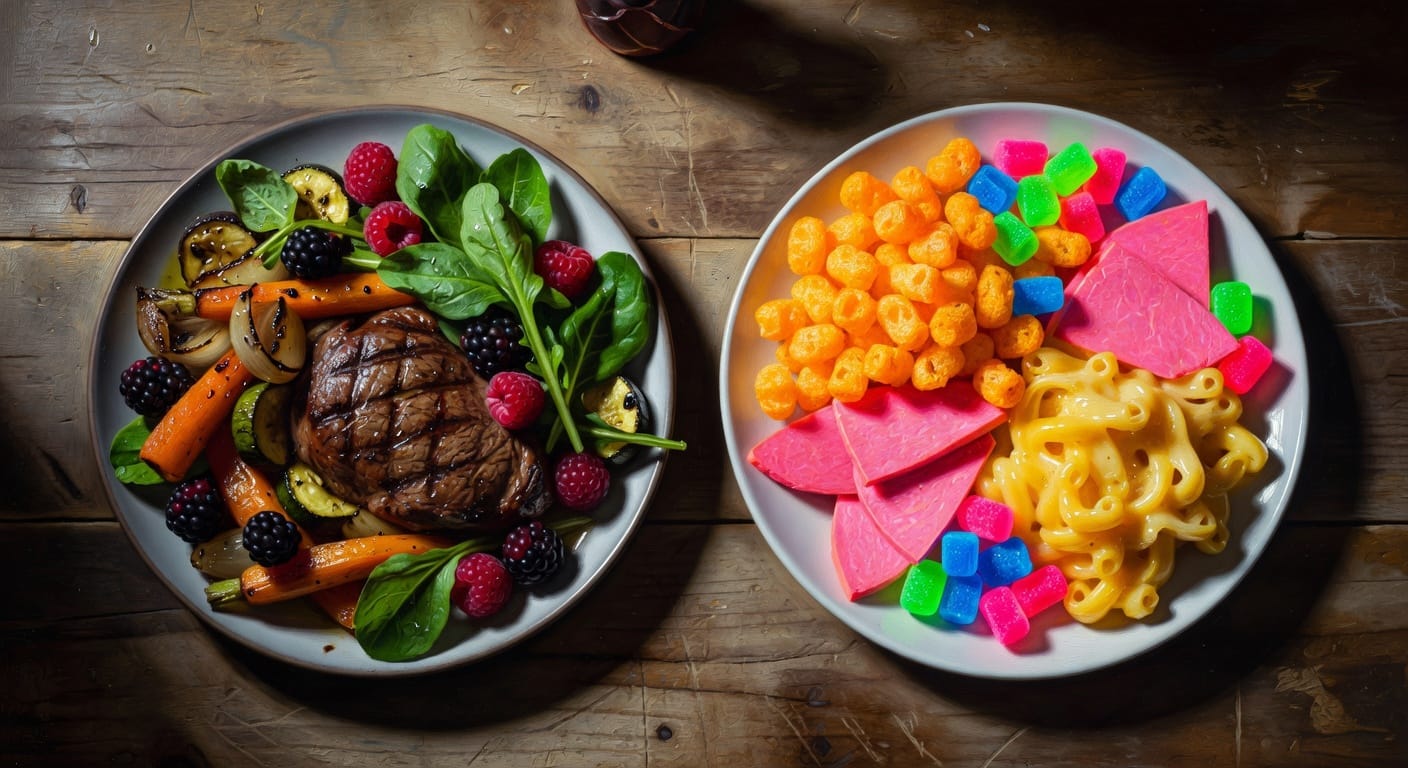
Here is a question nobody at the FDA wants you to sit with for too long: What happens to an organism that spent 200,000 years eating plants, animals, nuts, seeds, and tart seasonal fruit when you swap out most of its calories with industrially manufactured substances that didn’t exist until the 1950s?
We’re running that experiment right now. On 330 million Americans.
The CDC published data in August 2025 from the National Health and Nutrition Examination Survey (NHANES) spanning 2021-2023. The finding: 55% of all calories consumed by Americans age 1 and older come from ultra-processed foods. For kids and teenagers ages 1-18, the number was worse: 61.9%. An earlier NIH analysis found youth UPF consumption rose from 61% to 67% between 1999 and 2018, while whole, unprocessed food dropped from 29% to 23.5%. The most recent CDC data (2017-2023) shows a modest decline from 65.6% to 61.9%, so perhaps this trend has started to reverse as people are waking up to the problem.
The majority of what Americans eat is not food in any sense your great-grandmother would recognize. It’s industrial product: raw inputs assembled to resemble food, engineered to override satiety signals, and sold at margins that real food can’t match.
And the results are showing up in every health metric simultaneously.
What Counts As Ultra-Processed
The term “ultra-processed” comes from the NOVA classification system, developed by Carlos Monteiro and colleagues at the University of Sao Paulo. NOVA sorts all food into four groups. Group 1 is unprocessed or minimally processed: fruits, vegetables, eggs, meat, milk. Group 2 is processed culinary ingredients: oils, butter, sugar, salt. Group 3 is processed food: canned vegetables, artisan bread, simple cheese. Group 4 is ultra-processed.
Group 4 is where it gets interesting. Ultra-processed foods are “formulations of ingredients, mostly of exclusive industrial use, that result from a series of industrial processes.” They contain substances you will never find in a kitchen: hydrogenated oils, high-fructose corn syrup, modified starches, emulsifiers, humectants, flavor enhancers, colorants, thickeners, anti-foaming agents, glazing agents. The point of these ingredients isn’t nutrition. It’s shelf stability, appearance, mouthfeel, and profit margin.
Examples: soft drinks, packaged snacks, mass-produced bread, instant noodles, reconstituted meat products, sweetened yogurts, frozen meals, breakfast cereals, chicken nuggets, hot dogs, infant formula.
That list covers most of what fills a typical American grocery cart. Walk through any Walmart or Kroger and count the aisle space dedicated to Group 1 versus Group 4. The ratio will tell you everything you need to know.
The Body of Evidence
In February 2024, the BMJ published the most comprehensive assessment of ultra-processed food and health to date: an umbrella review of 45 pooled meta-analyses, encompassing roughly 10 million participants. The researchers found direct associations between UPF consumption and 32 out of 45 adverse health parameters, spanning mortality, cancer, mental health, respiratory, cardiovascular, gastrointestinal, and metabolic conditions. That’s 71% of everything they measured.
The grading: “convincing evidence” linked UPF to cardiovascular disease-related mortality, type 2 diabetes, anxiety, and common mental disorder outcomes. “Highly suggestive evidence” linked it to all-cause mortality, heart disease, obesity, and sleep problems.
Some highlights from the research pile:
Heart disease. A February 2026 study using NHANES data found that adults with the highest UPF intake had a 47% higher risk of heart attack or stroke. The results held after controlling for age, smoking, and income. The American Heart Association’s own review found high UPF intake linked to a 25-58% higher risk of cardiometabolic outcomes.
Cancer. A 2025 Harvard/Mass General study of nearly 30,000 women found the highest UPF consumers had a 45% higher risk of developing adenomas, precursors to early-onset colorectal cancer. That study landed in the same year that early-onset colorectal cancer was declared the fastest-rising cancer in young adults.
Dementia. A meta-analysis of 10 observational studies covering 867,316 adults found those with the highest UPF intake had a 44% increased risk of dementias, including mild cognitive impairment and vascular dementia. The Framingham Heart Study found UPF consumption in middle age was linked to increased Alzheimer’s risk, even after adjusting for diet quality and calorie intake, suggesting the processing itself is the problem.
Depression. A meta-analysis of 17 studies and 385,541 participants found UPF consumption associated with 53% higher odds of depressive and anxiety symptoms combined. A separate dose-response analysis found every 10% increase in UPF calories correlated with an 11% higher depression risk. The more of this junk you eat, the more depressed you get.
All-cause mortality. Depending on the study, the highest UPF consumers face a 31% to 40% higher risk of dying from anything compared to the lowest consumers.
The Only Randomized Controlled Trial
Observational studies invite the criticism that UPF consumers differ from non-UPF consumers in ways that confound results. Maybe people who eat more junk food also exercise less, smoke more, or have lower incomes, and those factors are the real drivers.
Enter Kevin Hall, a researcher at the National Institutes of Health who designed the first randomized controlled trial on ultra-processed food. Published in Cell Metabolism in 2019, the study admitted 20 adults to an NIH facility for four weeks. Each person spent two weeks on an ultra-processed diet and two weeks on an unprocessed diet, in random order. The meals were carefully matched for total calories, sugar, fat, fiber, and macronutrients. Participants could eat as much or as little as they wanted.
The results should have been front-page news for a month.
On the ultra-processed diet, people spontaneously ate approximately 500 extra calories per day. They ate faster. They gained an average of 2 pounds in two weeks. On the unprocessed diet, they lost an equivalent amount.
Same calories offered. Same macros. Same sugar, same fat, same fiber. The only variable was the degree of processing. And it drove people to eat 500 additional calories daily without even realizing it.
This is the study that should have ended the debate. The food isn’t just “unhealthy.” It actively overrides the body’s satiety mechanisms. It hacks the system that tells you to stop eating. That’s not a side effect. That, as we’re about to see, is the product.
Engineering the Bliss Point
The fact that ultra-processed food drives overconsumption isn’t a bug. It’s the core design feature.
In the 1970s and 1980s, a market researcher named Howard Moskowitz pioneered what the food industry calls “bliss point” optimization: the precise combination of sugar, salt, and fat that triggers the maximum pleasure response in human taste perception. Moskowitz didn’t invent junk food. He invented the mathematical framework for making it as irresistible as possible.
The techniques go well beyond flavor. Food scientists engineer texture (”mouthfeel”), aroma, visual appearance, and even the sound of food (the crunch of a chip, the snap of a candy bar) to maximize sensory reward. One concept that illustrates the sophistication is “vanishing caloric density”: foods like Cheetos are engineered to dissolve on the tongue so quickly that the brain’s calorie-tracking mechanisms never register the intake. You keep eating because your body doesn’t realize you’ve eaten. As Michael Moss documented in his 2013 book Salt Sugar Fat, food companies spend millions optimizing these parameters through focus groups, mathematical modeling, and iterative testing, searching for formulations that trigger the maximum dopamine response while minimizing the signal to stop.
They call it product optimization. A more honest phrase would be “engineering addiction.”
And now, AI is taking the engineering further. Machine learning platforms like “FlavorMiner” extract molecular flavor profiles from structural data. NLP algorithms sift through millions of consumer reviews and social media posts to identify emerging taste preferences. AI-powered formulation tools are cutting R&D time by up to 60%, allowing companies to iterate on bliss point formulations at speeds that human food scientists never could.
Howard Moskowitz used questionnaires and regression analysis. His successors have neural networks, real-time biometric feedback, and access to billions of data points on human eating behavior. The bliss point isn’t static anymore. It’s being refined continuously, algorithmically, at scale.
Call it what it is: addiction engineering. A 2023 paper in the journal Addiction by researchers at the University of Michigan evaluated ultra-processed food against the same scientific criteria the Surgeon General used to classify tobacco as addictive in 1988: compulsive use, psychoactive effects, behavioral reinforcement, and triggering strong cravings. Ultra-processed food met every single one. A 2026 review in Pharmacological Research confirmed that chronic UPF overconsumption alters dopaminergic tone, disrupts prefrontal control, and activates the same stress pathways that reinforce compulsive drug intake. The brain doesn’t distinguish between a hit of sugar-fat-salt engineered to the bliss point and a hit of nicotine engineered for maximum absorption. The food industry knows this. That’s why they optimize for it.
The Corporations That Built This
The handful of corporations that dominate the ultra-processed food market are not obscure operations. They’re some of the most recognized brands on Earth.
Nestle has been caught knowing exactly what it sells. A leaked internal presentation, reported by the Financial Times in May 2021, showed the world’s largest packaged food company acknowledging that more than 60% of its mainstream food and drinks do not meet a “recognised definition of health” and that “some of our categories and products will never be ‘healthy’ no matter how much we renovate.”
Coca-Cola took a different approach: if you can’t fix the product, fix the science. The company funded the Global Energy Balance Network, a research initiative explicitly designed to “change the conversation” about obesity by shifting blame from diet to exercise. The stated goal was to persuade the public they were “focusing too much on calories and portion size and not enough on exercise.” This was the tobacco playbook with a soda logo: fund researchers, launder findings through academic institutions, and muddy the scientific consensus until nobody knows what the root cause is.
The food and beverage industry spent $29.6 million on federal lobbying in 2024 alone, according to OpenSecrets. That buys a lot of inaction.
And the business model doesn’t stop at selling you the food that makes you sick. An investigation by The Investigative Desk found that seven of the ten largest food corporations also invest in dietary supplements, medical nutrition, and health products. Nestle runs Nestle Health Science, selling vitamins, supplements, and medical nutrition solutions to treat the conditions its mainstream portfolio helps create. They profit from the disease and the treatment. Make people sick with engineered food, then sell them the supplements. It’s the same racket the pharmaceutical industry runs, just with a friendlier mascot on the box.
The Fox Guarding the Grocery Store
The USDA writes America’s Dietary Guidelines. The USDA also exists to promote the American agricultural industry. That’s not a oversight. It’s the design. When the McGovern Committee recommended Americans eat less meat in 1977, the meat and dairy lobbies rewrote the language. When the USDA tried to publish its own Eating Right Pyramid in 1991, the same lobbies killed it. A 2024 study in Public Health Nutrition found the 2020 Dietary Guidelines Advisory Committee was riddled with conflicts of interest: the people telling Americans what to eat are funded by the industries selling the food.
Then there’s the GRAS loophole. Under current law, food companies can self-declare their chemicals as “Generally Recognized As Safe” and add them to food without FDA review, and without even notifying the FDA. The Government Accountability Office has recommended the FDA strengthen its oversight. The FDA hasn’t.
The Cholesterol Scam: How One Man’s Bad Science Became America’s Diet
This might be the most consequential fraud in the history of public health. Not because one researcher got it wrong (on purpose), but because the entire federal nutrition apparatus adopted his error as gospel and spent 50 years destroying American health in the name of preventing heart disease.
In 1953, a physiologist named Ancel Keys presented a graph showing a striking correlation between dietary fat consumption and heart disease deaths across six countries. The line was clean. The implication was clear: fat causes heart disease.
Data existed for 22 countries, not six. Keys selected the six that supported his hypothesis and ignored the rest. That’s fraud and corruption.
In 1957, statisticians Jacob Yerushalmy and Herman Hilleboe published a rebuttal in the New York State Journal of Medicine: “the association between the percentage of fat calories available for consumption in the national diets and mortality from arteriosclerotic and degenerative heart disease is not valid.” The correlation Keys presented disappeared when you used the full dataset.
Keys didn’t retract. He doubled down.
Remember how we’re told to “trust the science”? Well, the science is clear, it’s just not what the government usually says it is. That’s why trust should have nothing to do with it - go read the studies yourselves.
The government picked the flawed study that suited its needs, and flawed research became government policy.
The 1977 McGovern Committee published Dietary Goals for the United States: reduce saturated fat, replace it with carbohydrates and vegetable oils. By 1992, this became the USDA’s Food Guide Pyramid: 6 to 11 servings of bread, cereal, rice, and pasta at the base. Fats at the tiny apex, “use sparingly.”
And who drew that pyramid? The USDA, whose primary mission is promoting American agriculture, i.e., selling grain. Having the USDA write nutritional guidelines is like having Philip Morris write smoking guidelines.
Butter, lard, tallow, and other traditional animal fats that humans consumed for millennia were systematically replaced with industrial seed oils and grain-based carbohydrates. This wasn’t consumer preference. It was policy. Crisco, introduced in 1911, was made from hydrogenated cottonseed oil. The post-WWII margarine boom accelerated the transition. Per capita consumption of soybean oil increased over 1,000-fold from 1909 to 1999. Linoleic acid went from 2.79% to 7.21% of total energy intake.
For decades, the government told Americans to limit dietary cholesterol. Avoid eggs. Fear shrimp. The reality: your body produces roughly 80% of its own cholesterol. In 2015, the Dietary Guidelines Advisory Committee quietly dropped the cholesterol warning: “Cholesterol is not considered a nutrient of concern for overconsumption.” No apology. No reckoning. Just a quiet edit after generations of Americans avoided eggs based on advice that had no basis.
The results: coronary heart disease rose from “relative obscurity in the late 19th century” to the leading cause of death during exactly the period that seed oil consumption skyrocketed and animal fat consumption declined. Obesity: 13% in 1960. 30.5% by 1999-2000. Over 42% today.
Journalist Nina Teicholz spent nine years investigating this history. Her 2014 book The Big Fat Surprise documented how the nutrition establishment got fat wrong, how dissenting scientists were silenced, and how industry influence shaped policy.
In January 2026, the USDA released the 2025-2030 Dietary Guidelines, replacing MyPlate with an inverted food pyramid putting protein, dairy, and healthy fats at the top. The tagline: “Eat real food.” It took 49 years from the McGovern Committee to get here. How many people died in the process?
Will anyone be held accountable and go to prison for knowingly poisoning three generations of Americans? I think we all know the answer to that question.
Your Gut Is the First Casualty
The human gut microbiome contains trillions of microorganisms that regulate immune function, produce vitamins, communicate with the brain via the vagus nerve, and modulate inflammation throughout the body. A healthy, diverse microbiome is foundational to physical and mental health. Ultra-processed food destroys it.
A 2025 review in Nutrients found that UPFs are “associated with a decrease in microbial diversity,” lower levels of beneficial bacteria like Akkermansia muciniphila and Faecalibacterium prausnitzii, and increased pathogenic microorganisms. A Nature Reviews Gastroenterology & Hepatology paper documented that common food additives, including emulsifiers, artificial sweeteners, and colorants, affect the gut microbiome, intestinal permeability, and intestinal inflammation.
The specific mechanism is striking. Emulsifiers like carboxymethylcellulose (CMC) and polysorbate 80, found in hundreds of processed foods, strip the mucus layer protecting the intestinal wall. They literally cause leaky gut.
A randomized controlled trial found that dietary CMC reduced microbiome diversity and increased abdominal discomfort. A BBC-reported trial from 2026 found people on an emulsifier-restricted diet were three times more likely to see symptom improvement compared to those eating standard levels.
Your enteric nervous system contains more neurons than your spinal cord. When UPF-driven dysbiosis degrades that system, the downstream effects include the exact outcomes the research keeps finding: depression, anxiety, cognitive decline. Your gut isn’t just digesting food. It’s the frontline of your immune system, a major producer of serotonin, and a direct communication channel to your brain. And it’s being carpet-bombed daily by emulsifiers, artificial sweeteners, and industrial additives.
What Humans Actually Ate
For roughly 200,000 years of anatomically modern human existence, the diet consisted of what you could hunt, gather, fish, or forage. Wild game. Fish and shellfish. Leaves, roots, tubers, nuts, seeds, berries, seasonal fruit. (Mind you, fruits and berries back then were sour, not the sweet varieties of today.) Fermented foods were added once agriculture developed. The variety was enormous, the fiber content was high (estimates range from 70-150 grams per day compared to the modern American average of about 15), and the omega-6 to omega-3 fatty acid ratio was roughly 1:1 to 4:1.
Agriculture changed things about 10,000 years ago. Grain cultivation, animal domestication, dairy production. The diet narrowed. But the foods were still recognizable: wheat you could grind, animals you could butcher, vegetables you could pick. The processing was mechanical, not chemical.
Even then, people got sicker. Diseases of civilization (inflammation) started, neolithic people started to live shorter lives despite the increased food security, became shorter, and developed dental problems compared to their Paleolithic ancestors.
Then came the 20th century. Hydrogenated vegetable oils (Crisco, 1911). High-fructose corn syrup (commercial production, 1970s). The Green Revolution gave us industrial farming optimized for yield, not nutrition. Supermarkets replaced local markets. TV dinners replaced cooking. Snack foods became their own food group. And soybean oil, essentially absent from the human diet before 1909, became the most consumed fat in America by the 2000s.
That soybean oil isn’t just empty calories. A 2020 UC Riverside study published in Endocrinology found it dysregulated over 100 genes in the hypothalamus of male mice, including the gene controlling oxytocin, the hormone behind bonding, social behavior, and reproduction. Oxytocin levels dropped significantly. The kicker: the researchers tested a low-phytoestrogen version of the oil and got the same results. The culprit isn’t the plant estrogens everyone argues about. Something else in the oil itself, likely linoleic acid, is rewriting brain chemistry through a mechanism the “soy is fine” crowd hasn’t even looked at.
The post-WWII industrialization of food was the largest uncontrolled dietary experiment in human history. Within two generations, the majority of calories consumed by the most powerful nation on Earth went from recognizable whole foods to industrial formulations.
The Soil Is Dying: Why “Eat Your Vegetables” Isn’t What It Used to Be
Your grandmother’s tomato was a different food than your tomato. Same name, same plant, fundamentally different nutrition.
In 2004, researcher Donald Davis at the University of Texas at Austin published a landmark analysis examining USDA nutrient data for 43 garden crops between 1950 and 1999. The findings were bleak: reliable declines in protein, calcium, phosphorus, iron, riboflavin (vitamin B2), and vitamin C. The median decline in calcium was 16%. Riboflavin dropped 38%. Vitamin C fell 20%.
One cause is the “dilution effect”: industrial agriculture has spent decades breeding crops for yield, size, pest resistance, and growth rate. A tomato that grows twice as fast and twice as big doesn’t absorb twice the minerals from the soil. It absorbs roughly the same minerals and distributes them across more plant mass.
But the soil itself is depleting too. A 2022 study in PeerJ comparing regenerative and conventional farms found that crops grown in healthy, biologically active soil had significantly higher micronutrient and phytochemical density than conventionally farmed equivalents. The implication works in reverse: decades of intensive monoculture, synthetic fertilizers, and pesticides have degraded soil organic matter, destroyed microbial communities, and stripped trace minerals that aren’t replaced by NPK fertilizer. Nitrogen, phosphorus, and potassium makes plants grow. They don’t replace the zinc, selenium, magnesium, iron, and dozens of other micronutrients that healthy soil ecosystems have naturally.
Even people doing everything “right,” buying fresh produce, cooking at home, eating their fruits and vegetables, are getting fewer nutrients from the same foods than their grandparents. Some estimates suggest you’d need to eat eight oranges today to get the same vitamin A your grandmother got from one.
The solution? Grow your own food from heirloom seeds. Or buy from regenerative farms that prioritize soil health over industrial yield.
Bred for Sugar: How Modern Fruit Became Nature’s Candy
There’s a strange irony in being told to “eat more fruit” by the same institutions overseeing an obesity crisis. Not because fruit is bad, but because modern fruit is a different product than the fruit humans evolved eating.
Wild bananas were small, starchy things packed with hard seeds. The modern Cavendish banana is seedless, soft, and loaded with sugar. So much so, that zoos have had to stop feeding them to monkeys because the monkeys got obese and diabetic, and their teeth started to rot.
Wild watermelons were pale, bitter, and about the size of a large apple. Renaissance paintings show watermelons sliced open to reveal mostly white flesh. The modern watermelon is a bright red sugar bomb with a Brix rating around 9 to 12%. Wild corn (teosinte) was a scraggly grass with tiny kernels encased in a hard shell. Modern sweet corn has been bred to be hundreds of times larger and packed with sugar.
Apples tell the same story. Wild crabapples are small, tart, and fibrous. Modern varieties like Honeycrisp and Fuji have been specifically bred for sweetness. A Fuji apple contains roughly 22-23 grams of sugar, while a crabapple of similar weight contains a fraction of that. Cultivated blueberries are roughly twice the size of wild blueberries, with higher sugar and lower anthocyanin concentrations per gram.
“Eating fruit” in 2026 delivers a dramatically higher fructose load than eating fruit at any other point in human history. Your ancestors ate small, seasonal, fibrous, tart fruits. You’re eating sugar-optimized products available year-round. This compounds with the soil depletion: modern fruits contain more sugar and fewer nutrients than their ancestral counterparts.
The Fertility Connection
In Part 1 of this series, we covered the data: sperm counts down 59% since 1973, testosterone declining roughly 1% per year, one in five young American men meeting criteria for testosterone deficiency. PCOS doubling in women over three decades. The biological capacity to reproduce is degrading at population scale.
Ultra-processed food is one of the mechanisms.
A 2025 study in Cell Metabolism found that UPF consumption elevated urinary phthalate levels and may impair metabolic and reproductive function through endocrine hormone disruption. A cross-sectional study on female infertility documented the pathway: phthalates from UPF packaging reach the follicular fluid through ovarian capillaries, where they induce DNA damage in oocytes, inhibit follicle growth, and impair embryo development.
A 2024 paper in BMC Public Health put it bluntly: ultra-processed foods and their plastic packaging form “a toxic relationship.” The UPF itself degrades metabolic health. The packaging leaches endocrine disruptors (BPA, phthalates, PFAS) into the food. And the more processed the food, the more contact it has with plastic during manufacturing, transport, and storage. You’re not just eating industrial formulations. You’re eating the containers they came in.
This creates a feedback loop with the chemical exposure crisis we covered in Parts 1 and 2. The same endocrine disruptors driving the fertility collapse are being delivered directly into the body through the most consumed category of food. You can buy BPA-free water bottles and phthalate-free shampoo, and then sit down to a meal that’s been marinated in those same chemicals throughout its entire production chain.
What the Kids Are Eating
The statistics on children are the hardest to sit with.
61.9% of calories consumed by American youth ages 1-18 come from ultra-processed foods, according to the 2025 CDC data. For toddlers and school-aged children, separate data puts it at 47% and 59.4%, respectively. The long-term trend rose from 61% in 1999 to 67% by 2018, with recent data showing a partial retreat to 61.9%. Still nearly two-thirds.
These are the formative years when the body establishes its gut microbiome, when neurological development runs at full speed, and when endocrine systems calibrate for a lifetime. And more than six out of every ten calories entering these developing bodies are industrial formulations optimized for shelf life and profit margin, not human development.
The case of Bryce Martinez is a data point in human form: a 16-year-old with Type 2 diabetes and non-alcoholic fatty liver disease. These conditions were, within living memory, old-age diseases. Now they show up in teenagers. And while individual cases prove nothing in isolation, the population-level data is unambiguous: childhood obesity, childhood Type 2 diabetes, and childhood metabolic syndrome have all exploded on a timeline that tracks perfectly with the rise in UPF consumption.
California became the first state to phase ultra-processed food out of school lunches in October 2025, signing the “Real Food, Healthy Kids Act.” The phase-in begins in 2028. Until then, the school lunch program, funded by the same USDA that promotes the agricultural industry, will continue serving products from the same companies now being sued for fueling a public health crisis.
The irony would be funny if it weren’t killing people.
The Diseases of Civilization: Cancer Is Getting Younger
If the modern diet is so well-understood and well-managed, why are young people getting cancer at rates never seen before?
A 2023 study in BMJ Oncology found that early-onset cancer (under 50) increased by 79.1% from 1990 to 2019. Deaths rose by 27.7%. Colorectal cancer in adults under 50 has nearly doubled since the early 1990s, from 4.5 per 100,000 in 1987 to 9.4 per 100,000 in 2022, rising at roughly 3% per year. By 2030, colorectal cancer is projected to become the leading cause of cancer death in Americans aged 20-49.
It’s not just colon cancer. A 2025 NIH analysis found 14 of 33 cancer types showing increasing incidence in younger age groups, including breast, pancreatic, kidney, and uterine cancers.
These cancers are part of a larger pattern: the “diseases of civilization.” Coronary heart disease, obesity, type 2 diabetes, hypertension, epithelial cell cancers, autoimmune disease, and osteoporosis are “rare or virtually absent in hunter-gatherer and other non-westernized populations” but epidemic in the modern West.
This connects to Weston Price’s observations from the 1930s. The indigenous populations he studied didn’t just have near-perfect dental health with cavity rates as low as 0.09% of teeth affected. They had virtually no chronic disease. Within one generation of adopting the Western diet, everything collapsed.
What You Can Do
The good news is that this is one of the most actionable problems in the entire Biology & Survival series. You can’t filter microplastics out of your blood. You can’t avoid RF exposure in a modern city. But you can stop eating the stuff that’s destroying you. It just requires effort and, increasingly, money.
Cook real food. The single highest-leverage change. Meat, vegetables, eggs, butter, olive oil, fruit, nuts, seeds. If the ingredient list has more than four items, or includes anything you can’t pronounce, put it back.
Read labels aggressively. Look for emulsifiers (polysorbate 80, carrageenan, soy lecithin in high amounts), artificial sweeteners (aspartame, sucralose, acesulfame-K), artificial colors (Red 40, Yellow 5, Yellow 6), and industrial seed oils (soybean oil, canola oil, corn oil, safflower oil, sunflower oil). These are the markers of Group 4.
Eliminate seed oils where possible. Cook with butter, ghee, tallow, lard, olive oil, coconut oil, or avocado oil. The industrial seed oils that dominate UPF formulations (soybean, canola, corn) are high in omega-6 fatty acids, which promote inflammation when consumed at the ratios present in the modern diet. The ancestral omega-6 to omega-3 ratio was roughly 1:1 to 4:1. The modern American ratio is estimated at 15:1 to 20:1.
Grow something. Even a few herbs, tomatoes, or greens in containers represent calories that bypassed the entire industrial food system. For families pursuing the Exit & Build path, a serious garden or homestead provides the foundation for a diet that looks more like what humans ate for thousands of years than what corporations started selling in the last 50 years.
Protect the kids especially. Pack lunches. Avoid the school lunch line. Or better yet, homeschool. Teach children what food is. Not because you want to make them anxious about eating, but because the companies targeting them with cartoon mascots and “bliss point” formulations certainly aren’t going to teach them. One of your jobs as a parent is to develop a good bullshit detector in your kids, and it starts with food.
Rebuild your gut. Fermented foods (sauerkraut, kimchi, kefir, yogurt with live cultures), high-fiber vegetables, and prebiotic foods (garlic, onions, leeks, asparagus) support microbiome diversity. Keep in mind that anything shelf-stable is not fermenting and live anymore. Only the sauerkraut in the refrigerated section is live. The stuff on the canned aisle has been pasteurized and contains no probiotics.
Also avoid unnecessary antibiotics. If you’ve spent years on a UPF-heavy diet, the microbiome can recover, but it takes sustained effort.
Buy from farmers, not mega-corporations. Even this is harder than it should be. The meat industry isn’t just consolidated - it’s structurally locked down. Four companies (Tyson, JBS, Cargill, National Beef) control roughly 85% of U.S. beef processing, up from 36% in 1980. The number of beef slaughterhouses has collapsed from over 600 in the late 1970s to roughly 150 today. Federal law requires USDA-inspected slaughter for any meat sold commercially, and building an inspected facility costs millions. HACCP rules and the 2011 Food Safety Modernization Act demand the same paperwork from a small farm or ranch as a factory farm. The regulations that were supposed to keep meat clean became a moat protecting the companies that dominate the supply. Your neighbor can raise a healthy, drug-free cow on open pasture and it’s functionally illegal for him to sell you a steak.
Still - Farmers’ markets, CSA shares, local meat producers, buying clubs, there are options. Every dollar you redirect from Nestle, PepsiCo, and Kraft Heinz to a local farmer is a dollar removed from the system that’s making people sick and handed to someone growing actual food.
It’s time to kick Food, Inc. out of your fridge!
This is Part 7 of the Biology & Survival series, which covers the science showing that by 2045 the average person will become infertile, and explains all the reasons why, so that you can protect yourself, your children, and your grandchildren.
Next up: Part 8 will focus on pharmaceuticals.


Sources
1. CDC NHANES Data Brief #536: Ultra-Processed Food Consumption in Youth and Adults, 2021-2023. Link
2. NPR: “Ultra-processed foods still make up more than 50% of Americans’ calories.” Aug 2025. Link
3. NIH: “Highly processed foods form bulk of US youths’ diets.” Link
4. Lane MM et al. “Ultra-processed food exposure and adverse health outcomes: umbrella review.” BMJ, Feb 2024. Link
5. FAU/ScienceDaily: “Ultra-processed foods linked to 47% higher risk of heart attack and stroke.” Feb 2026. Link
6. American Heart Association Science Advisory on UPF and cardiometabolic health. Circulation. Link
7. Harvard/Mass General: UPF and early-onset colorectal cancer precursors. Nov 2025. Link
8. Henney et al. Meta-analysis: UPF and 44% increased dementia risk. Link
9. Framingham Heart Study: UPF and Alzheimer’s risk. Link
10. Lane MM et al. UPF and mental health: 53% higher odds of depressive/anxiety symptoms. Nutrients, 2022. Link
11. UPF and depression dose-response. Link
12. UPF and all-cause mortality. Link
13. Hall KD et al. “Ultra-Processed Diets Cause Excess Calorie Intake and Weight Gain.” Cell Metabolism, 2019. Link
14. NIH: First RCT on ultra-processed food. Link
15. San Francisco UPF lawsuit, Dec 2025. Link
16. Harvard Law: “The new case against ultraprocessed food.” Link
17. Martinez v. Kraft Heinz et al., 2024. Link
18. Nestle internal document, Financial Times, May 2021. Link
19. Reuters: Nestle admits 60%+ portfolio unhealthy. Link
20. Coca-Cola and Global Energy Balance Network. UCS. Link
21. OpenSecrets: Food & Beverage lobbying, 2024. Link
22. Nestle M. “Food Lobbies, the Food Pyramid, and US Nutrition Policy.” Int J Health Serv, 1993. Link
23. History.com: USDA dietary guidelines timeline. Link
24. DGA Advisory Committee conflicts of interest. Public Health Nutrition, 2024. Link
25. NYU: GRAS loophole. Link
26. EWG: What is GRAS? Link
27. GAO: FDA should strengthen GRAS oversight. Link
28. Viennois E et al. CMC and gut microbiome. Gastroenterology, 2021. Link
29. Nutrients 2025: UPF and gut microbiome. Link
30. Nature Reviews Gastroenterology: UPF and food additives in gut health. Link
31. BBC Future: Emulsifier-restricted diet trial. Link
32. Cell Metabolism 2025: UPF, phthalates, and reproductive function. Link00360-2)
33. PMC: UPF and female infertility. Link
34. BMC Public Health: UPF and plastic packaging, “a toxic relationship.” Link
35. AI and food flavor optimization. Comprehensive Reviews in Food Science, 2025. Link
36. Forward Fooding: AI cutting R&D time by 60%. Link
37. Lab Manager: NLP in food product development. Link
38. California AB 1264, Real Food Healthy Kids Act, Oct 2025. Link
39. Chile food labeling law evaluation. PLOS Medicine, 2020. Link
40. STAT News: Chile labeling didn’t reduce obesity. Link
41. ScienceDirect: UPF in pediatric health, toddler/school-age data. Link
42. Diabetes Care: UPF and Type 2 diabetes risk. Link
43. Gearhardt AN et al. “Highly processed foods can be considered addictive substances based on established scientific criteria.” Addiction, 2023. Link
44. “The addicted brain: How processed foods hijack reward pathways.” Pharmacological Research, 2026. Link
45. The Investigative Desk/Follow the Money. “Obesity as a business model: the food industry’s double agenda.” Aug 2024. Link
46. Davis, D.R. et al. (2004). “Changes in USDA Food Composition Data for 43 Garden Crops, 1950 to 1999.” JACN. PubMed
47. “Dirt Poor: Have Fruits and Vegetables Become Less Nutritious?” Scientific American. Link
48. Marles, R.J. (2017). “Mineral nutrient composition of vegetables, fruits and grains.” J Food Composition and Analysis. PubMed
49. Yerushalmy J, Hilleboe HE. (1957). “Fat in the Diet and Mortality from Heart Disease.” NYSJM. PubMed
50. Harcombe Z. “Keys six countries graph.” Link
51. McGovern Committee (1977). Dietary Goals for the United States. PMC
52. Blasbalg TL et al. (2011). “Changes in omega-3 and omega-6 fatty acids.” AJCN. PMC
53. Harvard Health. “How it’s made: Cholesterol production.” Link
54. CNN (2015). “Cholesterol in food not a concern.” Link
55. Cordain L et al. “Origins of the Western diet.” AJCN. PMC
56. Teicholz N. (2014). The Big Fat Surprise. Link
57. USDA (2026). “2025-2030 Dietary Guidelines.” Link
58. BMJ Oncology (2023). “Global early-onset cancer trends.” PubMed
59. Siegel RL et al. “Colorectal cancer in younger adults.” PMC
60. NIH (2025). “Early-onset cancer rates.” Link
61. Cordain L et al. “Diseases of civilization.” Research Reports in Clinical Cardiology. Link
62. Weston A. Price Foundation. “Principles of Healthy Diets.” Link
63. DiNicolantonio JJ, O’Keefe JH. (2018). “Omega-6 vegetable oils as a driver of CHD.” Open Heart. PMC
64. PMC (2025). “Dietary linoleic acid and cancer.” Link